Arena vs Grass Polo: Understanding the Differences
Compare indoor arena polo with traditional grass polo—rules, equipment, horses, and which is right for you.
# Arena vs Grass Polo: Which Is Right for You?
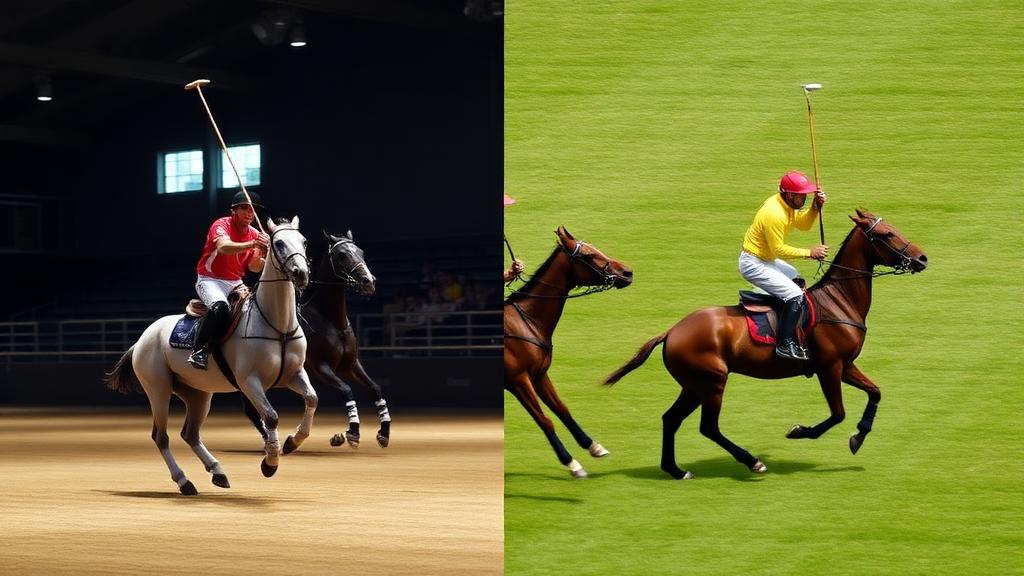
Polo is played in two main formats: traditional grass polo on outdoor fields, and [arena polo](/glossary/arena-polo) in enclosed spaces. Each format has distinct characteristics, rules, and appeal. Understanding these differences helps you choose the right format for your polo journey.
## Playing Surface and Dimensions
**Grass Polo**:
- Field size: 300 yards long by 160 yards wide (roughly 9 acres)
- Open outdoor environment with natural turf
- [Goal](/glossary/goal) posts 8 yards apart
- Played in most weather conditions (except lightning or frozen ground)
**Arena Polo**:
- Arena size: Typically 100 yards by 50 yards (enclosed)
- Indoor or covered facilities with sand or synthetic footing
- Inflatable side walls allow play off the boards
- Goal posts 10 feet apart
- Weather-independent, playable year-round
## Team Structure
**Grass Polo**: Four players per team (positions 1-4), each with distinct roles from attack to defence.
**Arena Polo**: Three players per team. The smaller space means fewer players, creating more individual involvement in each play.
## Rules Differences
While the fundamental rules remain similar, several key differences exist:
**Ball**: Arena polo uses a larger, inflated leather ball that bounces more predictably. Grass polo uses a hard plastic ball.
**Boarding**: In arena polo, the ball can be played off the side walls, similar to ice hockey. This keeps play continuous and requires different tactical awareness.
**[Chukka](/glossary/chukka) Length**: Arena chukkas are typically 7 minutes (compared to 7.5 for grass). Matches are usually 4 chukkas.
**Right of Way**: The same line-of-ball principles apply, but the enclosed space creates more frequent right-of-way situations.
## Horse Requirements
**Grass Polo Ponies** need:
- Exceptional speed for the large field
- Stamina for longer sprints
- Ability to gallop at full stretch
**Arena Polo Ponies** need:
- Quick acceleration and stopping
- Tight turning ability
- Comfort working in enclosed spaces
- Less emphasis on top-end speed
Many horses play both formats, though some naturally suit one over the other. Quarter Horse types often excel in arena polo, while Thoroughbreds thrive on grass.
## Which Format Suits Beginners?
**Arena Polo Advantages for Beginners**:
- Smaller space is less overwhelming
- Easier to see and follow play
- More touches on the ball per player
- Indoor facilities mean consistent scheduling
- Often available in urban areas
- Walls prevent chasing balls far off course
**Grass Polo Advantages for Beginners**:
- More space allows time to think
- Traditional format of the sport
- Less intense pressure on each play
- Natural outdoor experience
- Better preparation for competitive polo
**Recommendation**: Many coaches suggest starting with arena polo to develop ball skills, then transitioning to grass as abilities develop.
## Seasonal Considerations
**Northern Climates**: Arena polo allows year-round play when grass fields are frozen or waterlogged. Many clubs use arena polo as their winter programme.
**Warmer Climates**: Grass polo may be available year-round, with arena polo offering a different tactical challenge rather than a weather necessity.
## Equipment Differences
**Mallets**: Arena mallets are typically slightly shorter (50-52 inches versus 52-54 inches) and may have different head shapes for the larger ball.
**Safety Gear**: Face guards are mandatory in arena polo due to the smaller space and faster rebounds. They're optional but increasing in grass polo.
**Horse Tack**: Arena horses often use different leg protection due to the sand/synthetic surface and tighter turning demands.
## Making Your Choice
Consider these factors:
- **Location**: What's available near you?
- **Schedule**: Do you need weather-independent options?
- **Goals**: Are you aiming for high-goal grass polo ultimately?
- **Preference**: Do you prefer indoor or outdoor sports?
The good news: skills transfer between formats. Playing arena polo improves your grass game and vice versa. Many players enjoy both, appreciating each format's unique challenges and pleasures.