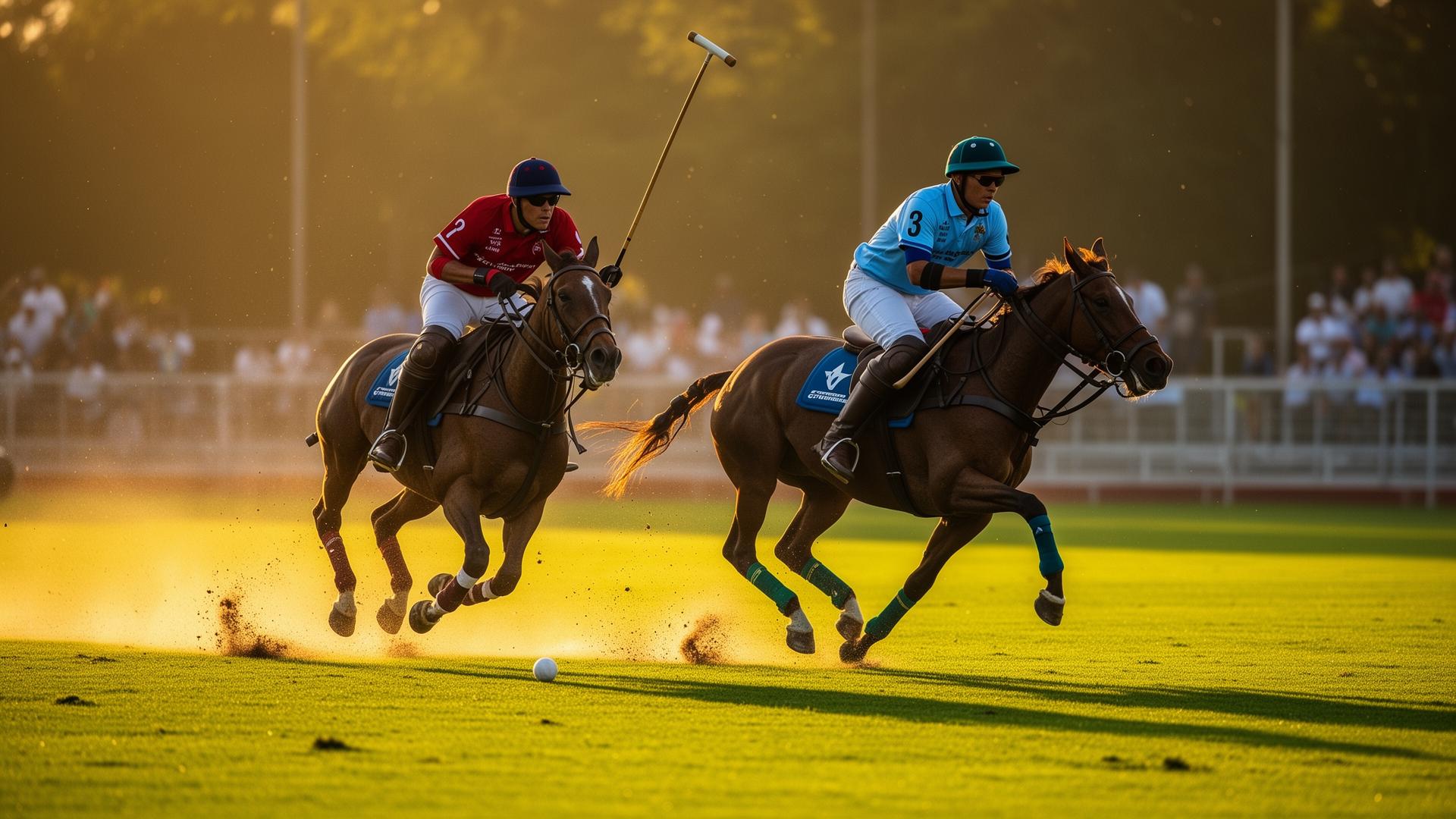
Handicaps Explained
The complete guide to polo's unique rating system — from -2 (novice) to 10 (elite). Learn how handicaps work and how to progress.
What is a Polo Handicap?
A polo handicap is a rating that measures a player's overall ability, ranging from -2 (complete beginner) to 10 (world-class elite). Unlike golf where lower is better, in polo, higher handicaps indicate better players.
The handicap system serves two purposes: it provides a standardized measure of playing ability, and it enables fair tournament play by allowing teams with different skill levels to compete on equal footing.
In team competition, individual handicaps are summed to create a team handicap. Tournaments specify maximum team handicaps (e.g., 8-goal, 12-goal, 22-goal), ensuring competitive balance and allowing players to find appropriate competition levels.
Handicap Levels Explained
Novice
Learning the basics, can ride safely and hit the ball at slow speeds.
Beginner
Can play slow chukkas, understands rules, developing swing consistency.
Intermediate
Competent player, can participate in club-level tournaments.
Good Amateur
Skilled player, consistent technique, good game sense.
Strong Amateur
High amateur level, often semi-professional or sponsored.
Professional
Top-tier professionals, playing high-goal polo.
Elite
World-class players, only ~50 10-goal players globally.
Note: Only about 50 players worldwide hold a 10-goal handicap at any time. Most recreational players plateau between 0 and 2 goals.
What Affects Your Rating
Horsemanship
CriticalYour ability to control and maneuver your horse at speed, change direction quickly, and ride competitively.
Hitting Ability
CriticalAccuracy, power, and consistency of your shots. Includes all four basic swings and advanced techniques.
Game Sense
Very ImportantUnderstanding positioning, anticipating play, making good decisions under pressure.
Team Play
ImportantWorking with teammates, communication, supporting plays, and defensive coordination.
Physical Fitness
ImportantStamina to maintain performance across multiple chukkas and matches.
Horse Quality
ContextualAccess to well-trained polo ponies. Better horses can enhance (or limit) your effective playing level.
Typical Progression Timeline
Every player progresses differently, but here's a realistic roadmap
Starting point
Complete Beginner
Just learning to ride and hold a mallet.
3–6 months
Learning Fundamentals
Can hit the ball consistently, understanding basic rules.
1–2 years
Entry Level Player
Playing slow chukkas, participating in beginner tournaments.
2–4 years
Club Player
Regular club-level competition, developing game strategy.
4–8 years
Competitive Amateur
Strong amateur, possibly traveling for tournaments.
8+ years
Advanced Amateur
Top amateur level, may turn professional.
How to Get Rated: Eligibility by Association
Each polo association has specific requirements for obtaining an official handicap rating.
| Association | Initial Rating Process | Rules Test | Notes |
|---|---|---|---|
| AAP (Argentina) | Play observed matches | Required for -2 and above | Strictest global standard |
| HPA (United Kingdom) | Club assessment + matches | Required for all players | Rules test mandatory before play |
| USPA (United States) | Membership + evaluation | Required for tournament entry | Outdoor and arena handicaps separate |
| FIP (International) | National federation rating | Varies by host country | Coordinates global recognition |
| FFP (France) | Club + federation evaluation | Required for -2+ | European standard |
| IPA (India) | Club evaluation + IPA review | Required | Growing player base |
Women's Handicaps
Several associations maintain separate women's handicap scales to encourage participation. A woman's handicap in these systems may differ from mixed-play ratings.
Countries with Women's Scales:
Women can choose to play on either scale in most jurisdictions.
Arena Polo Handicaps
Indoor/arena polo requires different skills—tighter turns, wall play, smaller field. Many associations issue separate arena handicaps.
Countries with Arena Scales:
Arena handicaps typically don't exceed 4-5 goals.
Global Handicap Overview
Most countries use a -2 to 10 goal scale following the Fédération Internationale de Polo (FIP) framework. However, there is no unified global handicap authority—each national polo association manages its own system independently.
Key variations exist in assessment processes, women's handicaps (some countries have separate women's scales), arena polo handicaps, and the interpretation of skill levels. Argentine handicaps (AAP) are widely considered the strictest standard—players rated at a given level in Argentina are often rated 1-2 goals higher elsewhere.
Standard Scale
-2 to 10 goals (most countries)
Women's Handicaps
Separate scales in ARG, UK, US, FR, DE
Arena Polo
Separate handicaps in UK, US
Handicap Systems by Country
Click on any country to view detailed information about their handicap system, assessment criteria, update frequency, and official resources.
Frequently Asked Questions
Start Your Polo Journey
Everyone starts somewhere. Find a club, take lessons, and begin your path through the handicap system.
Last updated: May 2026