Understanding Medium and High Goal Polo
What medium and high goal polo actually mean, how teams are built at these levels, how the patron system works, and what it costs to participate.
Understanding Medium and High [Goal](/glossary/goal) Polo
When people outside the polo world imagine the sport — the gleaming ponies, the immaculate grounds, the prestigious tournaments — they are usually picturing high-goal polo. This is the elite end of the sport: the Argentine Open, the British Open at Cowdray, the US Open in Wellington. But between the introductory world of club chukkers and the rarified heights of open-level play sits a large and important middle ground: medium-goal polo.
Understanding the difference between these levels — and how teams are built, funded, and structured at each — gives you a much clearer picture of the sport's architecture and where your own polo fits within it.
How "Goal" Levels Work
Tournament polo is organised by combined team [handicap](/glossary/handicap). A "20-goal" tournament allows each team a maximum combined [handicap system](/handicap) rating of 20 goals across its four players. An "8-goal" tournament caps teams at 8 combined goals. This system allows the sport to create competitive brackets that are genuinely fair.
The naming convention works as follows:
These thresholds are not universal — national associations vary somewhat in how they define the bands — but the principle is consistent.
Low-Goal Polo: The Club Game
Low-goal polo is the world of the club player. The 6-goal, 8-goal, and informal club tournaments that form the backbone of recreational polo worldwide fall here. Teams typically consist of a mix of amateurs at -1 to 2 goals. The pace is competitive but not overwhelming, and the emphasis is on development, camaraderie, and enjoyment.
Players in this bracket are funding their own polo primarily — horses, equipment, [costs](/costs), and club membership. While teams may have arrangements and there is genuine competition, the commercial structure is minimal.
Medium-Goal Polo: The Transition Zone
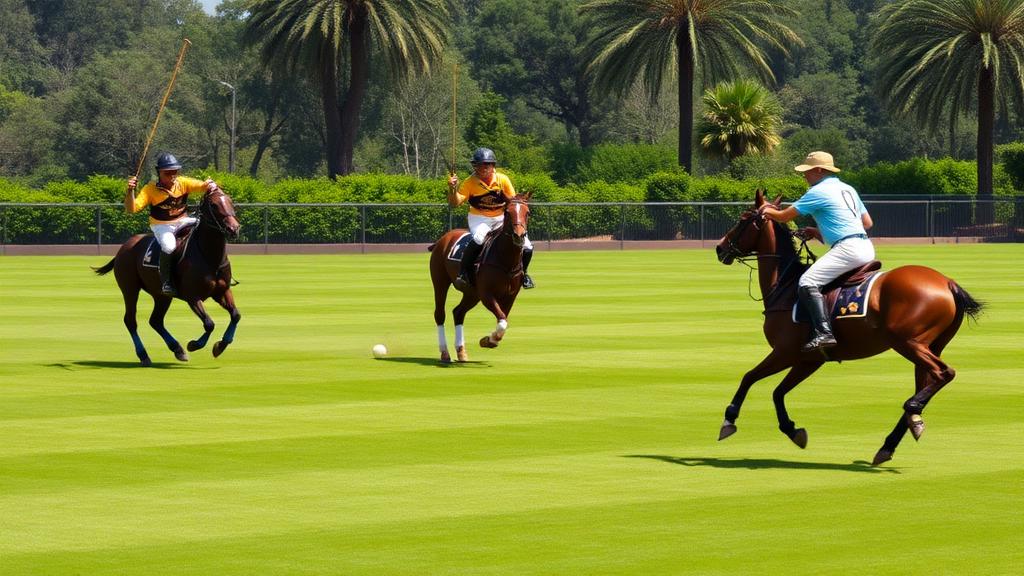
Medium-goal polo — roughly 8 to 16 goals — is where the sport becomes visibly more serious. Teams are typically faster, stronger, and more tactically sophisticated. The horses are better trained and more numerous. And the structures that characterise higher-level polo begin to emerge.
What a Medium-Goal Team Looks Like
A typical medium-goal team might consist of:
The exact composition depends on the tournament ceiling. A 12-goal team might include a 2-goal patron and three professionals averaging 3.3 goals each.
The Patron System
The patron system is fundamental to understanding polo above the club level. A patron is, in simple terms, the financial backer of the team. In exchange for funding the professionals' horses, expenses, and appearance fees, the patron earns a place on the team and the competitive experience that comes with playing alongside high-level professionals.
This arrangement has been central to polo for over a century and is neither unusual nor controversial within the sport. It is frankly acknowledged: patrons buy their way onto competitive teams, and professionals earn their living by making those teams competitive. The relationship works because it benefits all parties.
For the patron, the benefits are:
For the professionals, the benefits are:
Medium-Goal Costs
Funding a medium-goal team as a patron is a significant financial commitment. While costs vary enormously by country, level, and the specific professionals involved, a rough framework for a single season at a typical medium-goal venue might include:
The [costs](/costs) of polo at this level place it firmly in the realm of the affluent — comparable to owning a competitive racing [string](/glossary/string) or a yacht rather than a hobby.
High-Goal Polo: The Elite Level
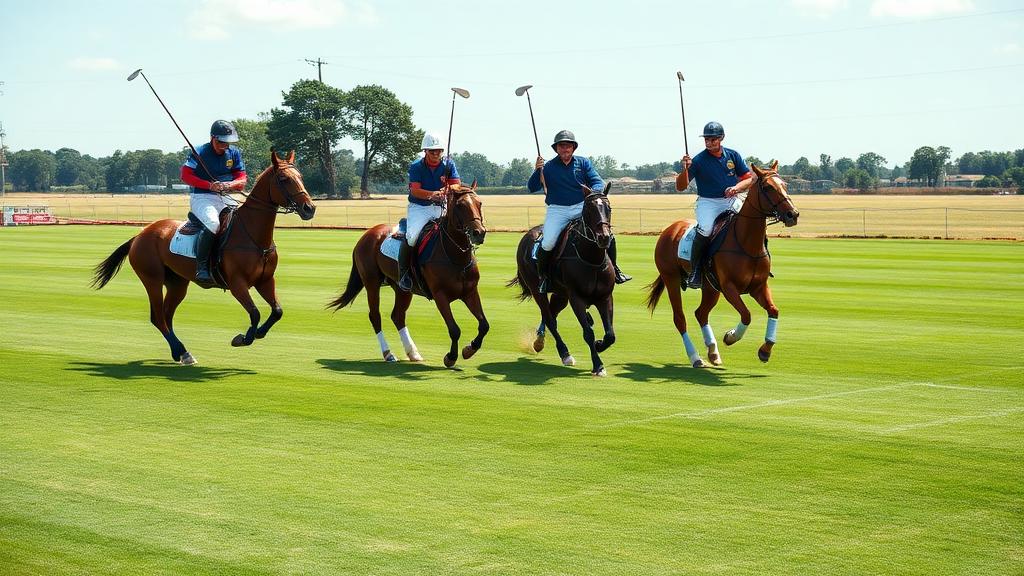
High-goal polo — from approximately 15 to 22 goals — is where the sport operates at near-professional standard. In Britain, the high-goal season centres on Guards Polo Club at Windsor and the prestigious tournaments at Cowdray Park. In the USA, it is concentrated in Wellington, Florida, during the winter/spring season. In Argentina, the Buenos Aires season culminating in the Argentine Open is the pinnacle.
The Teams
High-goal teams are built around elite professionals, typically with one patron among the four players. The professionals in a 20-goal team are typically rated 5 to 8 goals individually — players who compete in or are aspiring to the Argentine circuit.
A typical 20-goal English high-goal team:
In the most prestigious competitions — the Gold Cup in Britain, the US Open — you find 26-goal teams where the professionals are among the best in the world.
The Horses
At high-goal level, horse quality is the primary differentiator between good teams and great ones. High-goal professionals maintain strings of 6 to 12 horses per tournament, each trained specifically for polo and ridden to peak condition. The cost of a single high-goal polo [pony](/glossary/pony) from Argentina can exceed £50,000 to £100,000. A competitive high-goal string may represent an investment of £500,000 or more.
Horse selection is a topic covered in depth in [polo ponies](/learn) resources. At this level, the horse is not just transport — it is a sophisticated athletic partner that the professional has spent months or years developing.
Patron Costs at High Goal
The financial commitment required to field a high-goal team as a patron is substantial. Estimates vary, but fielding a team in the British high-goal season — including professional fees, horse costs, grounds, and logistics — typically runs into hundreds of thousands of pounds per season. For the top American and Argentine circuits, costs can be significantly higher.
This is not to say that high-goal patronage is inaccessible to all but billionaires. Many patrons participate in syndicates or cost-sharing arrangements, reducing individual exposure while maintaining access to top-level competition.
The Significance of High-Goal Polo for Professional Development
For professional players, performing well in high-goal polo is career-defining. The circuits are watched closely by the polo world's most influential patrons, who are continuously evaluating players for their own teams. Strong seasons in the British or American high-goal can lead to invitations to play in Argentina — the ultimate ambition for elite professionals.
The Argentine Open, contested at 40 goals, is effectively the World Cup of polo. Teams consist of four players who together are rated at exactly 40 goals — meaning a typical team might have players rated 8, 10, 10, and 12 goals. Playing in the Argentine Open is the definition of having arrived at the pinnacle of the sport.
Playing Up: When Amateurs Compete Above Their Rating
One of polo's interesting structural features is the concept of "playing up" — competing in a bracket where the team's aggregate handicap requirement exceeds your contribution. Under most association rules, a team may have a lower aggregate than the maximum; they simply receive a handicap start from teams at the ceiling.
This means a 0-goal amateur can in theory be included in a 12-goal team — perhaps as a fourth player filling out a roster — though this is uncommon in serious competition. More realistically, players occasionally compete one or two goals above their natural bracket when invited to fill a team position.
Watching High-Goal Polo: What to Look For
For spectators at high-goal events, the visible differences from club polo are dramatic:
If you attend [polo clubs](/clubs) events or major tournaments, positioning yourself at the halfway point of the ground and watching how professionals manage space will teach you more about the game than any amount of instruction.
Frequently Asked Questions
What is the minimum handicap needed to play medium-goal polo?
As a patron, typically 0 to 3 goals. As a hired professional, typically 4 to 6 goals. The minimum is determined by the team composition rules of the specific tournament.
Can club players ever participate in high-goal events?
Rarely and indirectly. A club player rated at 1 to 2 goals will not typically appear in a 20-goal team. However, some patrons play at medium-goal level and then fund high-goal teams in which they do not themselves play.
How do I become a patron?
There is no formal pathway to becoming a patron — it is primarily a financial and social decision. The typical route is to develop your playing to a meaningful level (0 to 3 goals), build relationships within the polo community, and approach professional players or agencies about forming a team. Polo is a relationship-driven world.
How are professionals paid at high-goal level?
Professional contracts vary widely and are typically confidential. Payment structures include salary, horse costs covered, accommodation during tournament seasons, and sometimes percentage arrangements based on prize winnings. Top professionals at 8 to 10 goals command fees that can reach six figures per season.
Are there women playing at high-goal level?
Yes. Women's high-goal polo has grown significantly in recent years, with dedicated high-goal women's circuits in Britain, the USA, and Argentina. Female professionals compete at the same handicap levels as men, and mixed-gender polo (where men and women play on the same team) is common in many markets.
What is "subsidiary" polo and how does it relate to high-goal?
Subsidiary tournaments run alongside major high-goal events and include teams that have been knocked out of the main draw or additional entries at slightly lower ratings. These provide competitive polo for players who are approaching but not yet at high-goal standard.
How is prize money structured at high-goal level?
Prize money exists at major tournaments but is typically modest relative to the costs involved — particularly at the British and American circuits. The value of high-goal competition lies primarily in reputation, development, and the patron experience rather than financial return.
What does "open" polo mean?
Open polo means there is no maximum team handicap restriction. The Argentine Open is technically open, though in practice the teams that compete are all at the 40-goal level. Some national-level events allow open entries to create a true meritocratic competition.