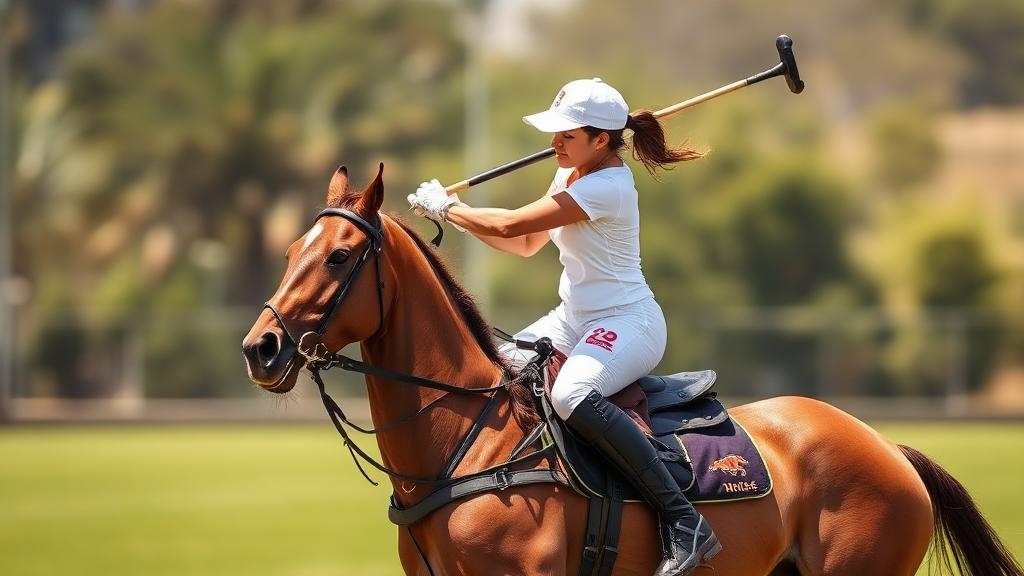
Polo in Australia: Ellerston and the Southern Season
Australia is home to one of the world's finest polo estates in Ellerston, a thriving club scene across five states, and a summer season that draws international professionals during the northern hemisphere's off-months.
Polo in Australia: Ellerston and the Southern Season
Australia occupies a singular position in global polo — a country with the climate, land, and equestrian culture to support world-class polo, the geographic good fortune to host its season when the northern hemisphere is quiet, and one single property so extraordinary that it functions as a reference point for what polo can be at its absolute finest: Ellerston.
Ellerston: The World's Greatest Polo Estate
**Ellerston Station** in the Hunter Valley of New South Wales — owned by the Packer family — is widely considered the finest private polo property on earth. The estate encompasses:
Ellerston's annual invitation-only tournaments draw the world's top professionals — Argentine 10-goalers, top-ranked players from the UK and USA — to a property so remote and so lavishly equipped that playing there has been described by professionals as the finest polo experience of their careers. The combination of immaculate grass, perfect climate during the October–December season, and the Hunter Valley's extraordinary natural setting creates conditions that are simply impossible to replicate elsewhere.
Ellerston is private and not open to the public. However, its influence permeates Australian polo — the standard it sets, the professionals it attracts, and the Packer family's investment in Australian polo have raised the entire country's competitive level.
The Australian Polo Season
Australia's polo season runs from **October through April** — the southern hemisphere's spring and summer — making it the perfect alternative circuit for professionals and polo-tourism visitors when northern Europe and Argentina are in their off-season.
Key dates:
**States and their polo scenes**:
The Hyde Family Legacy
Australian polo is defined by its great family dynasties, none more significant than the **Hyde family** of New Zealand (who have also shaped the Australian game profoundly). **Chris Hyde** (9-[goal](/glossary/goal)) — whose father Sinclair Hyde was a leading New Zealand polo figure — has had an extraordinary international career that reflects how Australian and New Zealand polo intersect with the global professional circuit.
The **Gilmore family** (Victoria), the **Jaime** family (NSW), and the **Archibald** family are among the Australian polo dynasties whose influence stretches across generations.
The Trans-Tasman Rivalry
The **Trans-Tasman Challenge** between Australia and New Zealand is one of polo's most significant bilateral competitions — a genuine rivalry between two nations with deep equestrian cultures, strong team traditions, and the shared heritage of southern hemisphere polo. The challenge is hosted alternately in each country, bringing together the best Australian and New Zealand players in an intensely competitive team format.
Playing Polo in Australia
Australia has approximately 2,000 registered polo players across the Australian Polo Federation's (APF) national structure, with particular strength in NSW and Victoria.
**Cost of polo in Australia**: Lessons range from A$80–150 per session; chukkas from A$100–200 including horse hire, depending on the club and state. Costs are broadly comparable to mid-range British polo. The quality of instruction available in Australia is high — many Australian coaches have trained in Argentina or at top UK clubs.
**Best clubs for beginners**:
**For international visitors**: The Australian polo season (October–April) coincides with Australia's spectacular summer. Combining polo in NSW or Victoria with Sydney, the Great Barrier Reef, Melbourne's food scene, or a Queensland beach holiday makes Australia an outstanding polo-tourism destination that northern hemisphere polo players rarely consider but invariably love.
Australian Polo's Future
Australia has the infrastructure, the climate, and the equestrian culture for polo to grow significantly. The challenge — as in New Zealand — is the distance from the global polo centres of Argentina, the UK, and Wellington, Florida. Argentine professionals visit for the southern hemisphere season but the core circuit remains Argentine-centred.
What Australia offers is authenticity — polo played in one of the world's great landscapes, on pastures of extraordinary quality, by a community that loves the sport with the uncomplicated passion of a country where equestrian life is in the national DNA.