Polo in Austria: Alpine Polo and the Schloss Ebreichsdorf Legacy
Austria's polo scene is shaped by its alpine geography, equestrian heritage, and the landmark Schloss Ebreichsdorf venue that has hosted some of Central Europe's finest polo.
Polo in Austria: Alpine Polo and the Schloss Ebreichsdorf Legacy
Austria occupies a distinctive and underappreciated position in European polo. The country's combination of alpine geography, deep equestrian heritage, and central European location has produced a polo scene that punches well above its weight in quality and in the beauty of its settings. For polo played in scenic mountain backdrops or on the grounds of Habsburg-era estates, Austria offers experiences found nowhere else in Europe.
This guide covers the Austrian polo landscape, its unique geographical characteristics, the tournament calendar, and practical information for visiting players and spectators. For broader European polo context, see our [clubs directory](/clubs) and [international polo](/learn) resources.
Austria's Equestrian Heritage
Austria's horse culture is among Europe's deepest. The Spanish Riding School in Vienna — home of the Lipizzaner stallions — is arguably the world's most famous classical horsemanship institution, a tradition stretching back to the sixteenth century. Austrian equestrian culture encompasses classical dressage, show jumping, carriage driving, and an extensive agricultural horse-keeping tradition in the Alpine regions.
This equestrian depth creates the rider skill base and horse supply that polo requires. Austrian players entering polo from other equestrian disciplines typically bring a level of horsemanship sophistication that accelerates polo development.
Schloss Ebreichsdorf: Austria's Iconic Polo Venue
Schloss Ebreichsdorf, located approximately 30 kilometres south of Vienna, is the centrepiece of Austrian polo. The schloss (castle/manor) grounds provide one of Central Europe's most atmospheric polo settings — historical architecture, manicured grounds, and a quality of venue that has hosted international tournaments and attracted players from across Europe and Argentina.
The Ebreichsdorf polo ground has been the venue for some of Austria's highest-profile polo events, including invitational tournaments that have brought international professional players to the Austrian scene. The venue's quality and the setting's drama — the schloss visible behind the polo ground — create an atmosphere that ranks among Europe's premier polo event experiences.
The Austrian Polo Club Landscape
Vienna Region
The Vienna region, with Austria's highest concentration of international business, diplomatic, and wealthy residential communities, naturally anchors the country's polo scene. The capital's connections to international polo networks through the European diplomatic community add an international dimension beyond what Austria's population size alone would suggest.
Tyrolean and Alpine Polo
The Alpine provinces of Tyrol and Salzburg present both challenges and opportunities for polo. The mountainous terrain limits flat ground availability, but mountain valley locations provide dramatic backdrops. Alpine polo events — typically smaller and more exclusive — have been organised in resort contexts, attracting a high-net-worth winter sport community that overlaps naturally with polo's demographic.
Styrian Polo
Styria, Austria's agricultural heartland east of the Alps, has more terrain suitable for standard polo grounds. The region's horse culture and agricultural estates provide infrastructure for polo operations away from the alpine zones.
The Austrian Polo Season
**May–June**: Season opening. Vienna-area grounds become viable. Alpine locations may extend the usable season into September.
**July–August**: Peak season. Schloss Ebreichsdorf and other premier venues host their main tournament events.
**September**: Second tournament period. Cooler temperatures and often firm ground make September excellent for polo.
**Winter**: [Arena polo](/glossary/arena-polo) in indoor equestrian centres extends the season for dedicated players.
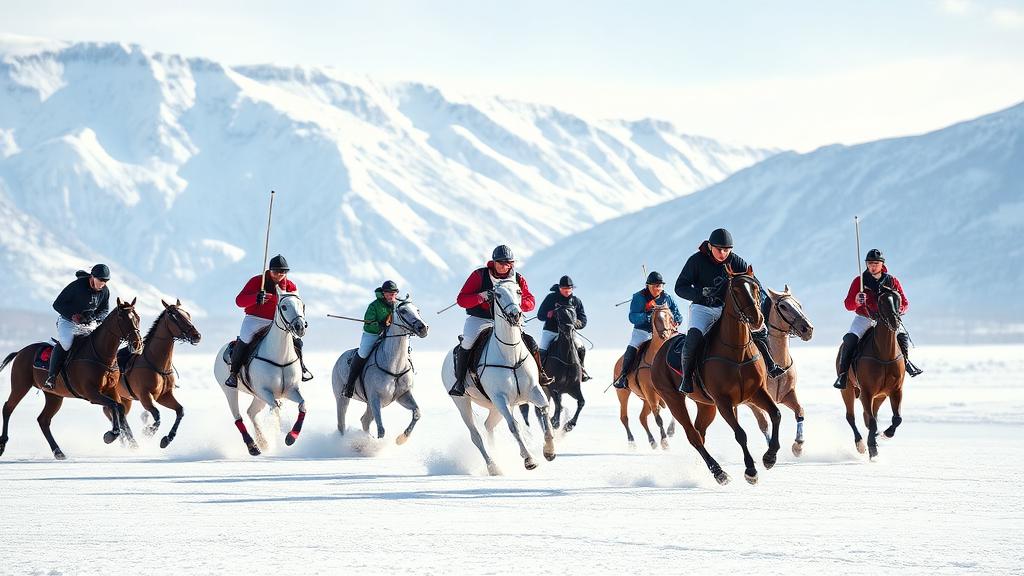
Alpine resort polo — particularly in Tyrol and Salzburg area resorts — creates a separate winter polo calendar that capitalises on the ski resort demographic. Some Austrian resorts have hosted polo-on-snow events similar to those in St Moritz.
Austrian Polo and the Central European Circuit
Austria's central European location — bordering Germany, Switzerland, Czech Republic, Hungary, and Slovenia — places it at the intersection of multiple national polo communities. Austrian clubs participate in the informal Central European polo circuit, connecting with German, Swiss, Czech, and Hungarian polo scenes.
This geographical connectivity means Austrian players and clubs have access to a broader competitive pool than Austria's domestic numbers alone would provide. For a player based in Vienna, reaching Munich, Zürich, or Prague for polo events is entirely practical.
The Habsburg Connection: History and Aristocratic Legacy
The Austro-Hungarian Empire produced one of the most elaborate aristocratic and cavalry cultures in European history. The imperial cavalry officers who formed much of the early European polo community in the late nineteenth century included Austro-Hungarian officers, and the sport had a foothold in Vienna and among the nobility of the empire before the First World War fundamentally changed the social landscape.
Modern Austrian polo maintains a connection to this aristocratic heritage through some of its venues and some of its family dynasties — though the sport has diversified well beyond that base. The historical resonance of playing polo at a Habsburg-era schloss is part of what makes Austrian polo a unique experience.
Visiting Austria for Polo
Austria is one of Europe's premium travel destinations independently of polo. Vienna is routinely rated as one of the world's most liveable and culturally rich cities; the Alpine regions are among the most scenic in the world.
**Vienna**: Imperial architecture, world-class museums, the Vienna Philharmonic, Viennese coffee house culture, and some of Europe's finest restaurants. A polo visit anchored in Vienna is also a cultural highlight.
**Alpine resorts**: Innsbruck, Salzburg, and the Tyrolean ski resorts offer extraordinary scenery and resort-level hospitality.
**Cost**: Austria is moderately expensive — on a par with Germany and Belgium, less than Switzerland. Vienna is more expensive than rural Austria.
**Transport**: Vienna International Airport has excellent European and intercontinental connections. Austria's rail network is efficient and beautiful, connecting cities through alpine scenery.
Frequently Asked Questions
Is Schloss Ebreichsdorf open for public polo events?
Tournament events at Schloss Ebreichsdorf have historically been open to spectators for major finals and invitation events. Check current event calendars through Austrian polo federation channels for specific event access.
What level of polo is played in Austria?
Most Austrian polo is in the 4 to 8 [goal](/glossary/goal) tournament range. International invitation events at Schloss Ebreichsdorf and similar venues have featured higher-goal play. The domestic club level is primarily a medium-goal environment.
Is there polo in Tyrol for ski resort visitors?
Occasionally. Alpine polo-on-snow events have been organised in resort contexts in the Tyrolean and Salzburg regions, typically as exclusive invitation events rather than publicly ticketed events. These are worth monitoring through luxury resort communications.
How do I contact Austrian polo clubs?
The Österreichischer Polo Verband (Austrian Polo Federation) is the primary contact point. Austrian clubs can also be reached through the European polo federation network.
Is German required for Austrian polo?
German is the national language, but English proficiency is high in Austrian polo circles, particularly in Vienna and international-facing clubs. Most polo communication at club level can be conducted in English.
What is the most spectacular polo event in Austria?
By reputation, the major summer tournament at Schloss Ebreichsdorf is considered the highlight of the Austrian polo calendar — combining competitive polo with a uniquely beautiful historic venue.