Arena Polo Rules: How They Differ from Grass Polo
Arena polo is the indoor version of the sport — smaller field, three players per side, boards instead of sideboards, and a different ball. Here is how the rules differ and why arena polo is ideal for beginners.
[Arena Polo](/glossary/arena-polo) Rules: How They Differ from Grass Polo
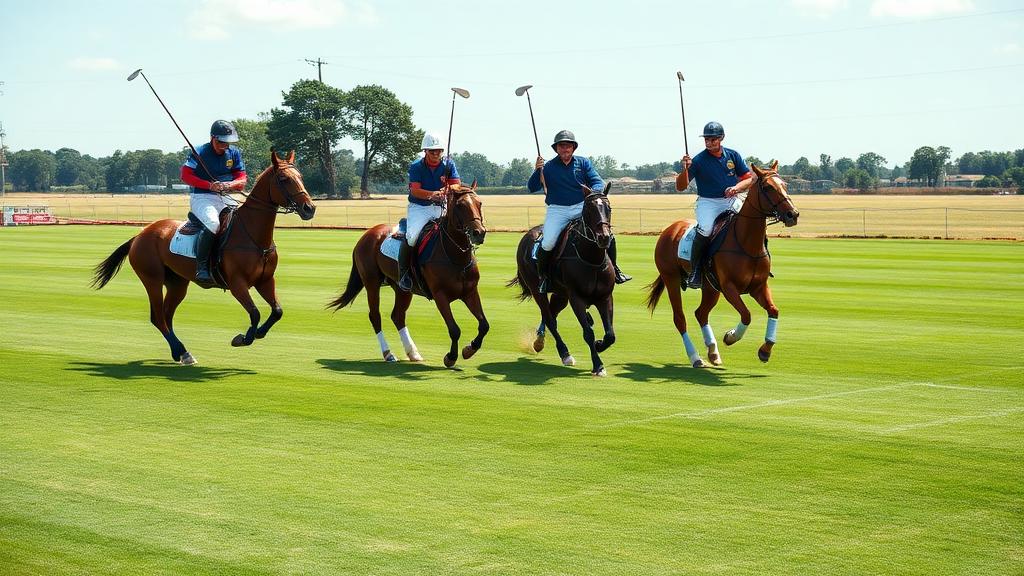
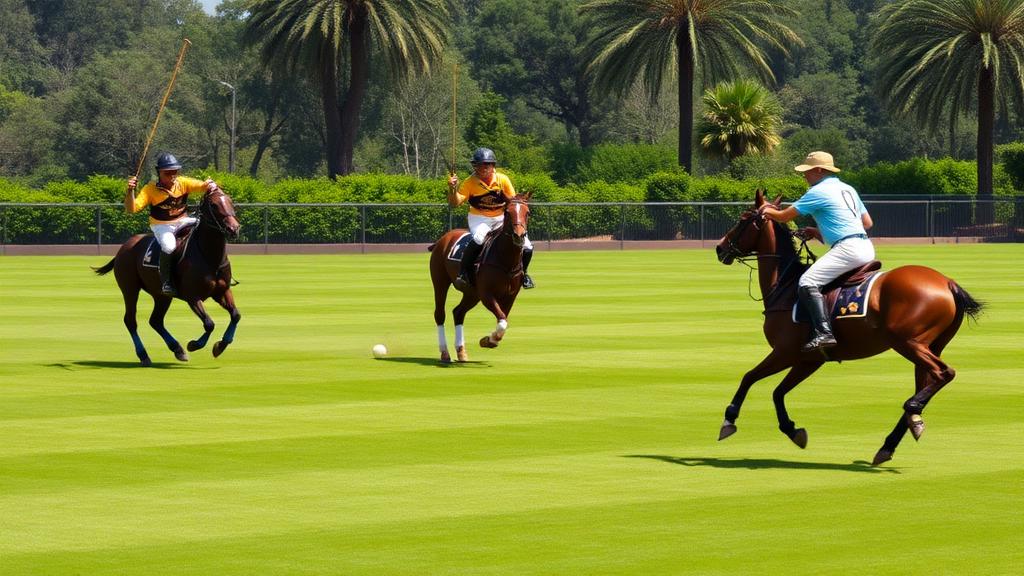
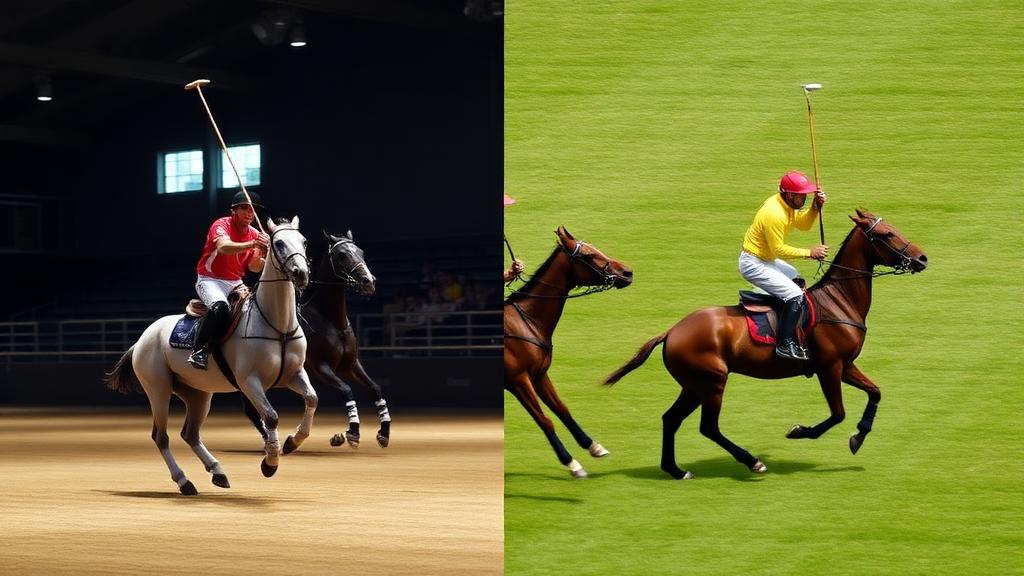
If you have only encountered outdoor grass polo, arena polo can feel like a different sport. The field is smaller, there are walls (boards) instead of open [sideboards](/glossary/sideboards), only three players per side rather than four, and the ball is larger and softer. The pace is different, the tactical patterns are different, and the rules diverge in several important ways from the standard outdoor game.
Understanding arena polo's specific rules makes it much easier to follow — and reveals why many polo educators consider arena polo the ideal learning format for beginners.
What Is Arena Polo?
**Arena polo** is polo played in an enclosed space — either an indoor arena or an outdoor arena with boards on all four sides. The format originated in the United States and has been a significant part of American polo for over a century. The **USPA** sanctions a full national arena polo calendar with its own championship structure.
In the UK, the **HPA** also sanctions arena polo through the winter season, making it an important component of year-round polo participation.
The Key Differences — Arena vs Grass
| Element | Grass Polo | Arena Polo |
|---|---|---|
| Players per side | 4 | 3 |
| Field size | 300 x 160 yards | ~100 x 50 yards |
| Ball | Hard white/yellow ball | Larger, softer leather ball |
| Boards | Side boards only | Boards on all four sides |
| [Chukka](/glossary/chukka) length | 7.5 minutes | 7 minutes |
| Goals | Open-ended | Scored through goalposts in end boards |
| [Line of the ball](/glossary/line-of-the-ball) | Same principle | Adapted for enclosed space |
Three Players Per Side — How This Changes the Game
The most fundamental structural difference is the team size: **three players per side** rather than four. This means each player covers a larger proportion of the field and has more direct involvement in every passage of play.
**Position numbering**:
In grass polo, four-player teams create more specialisation. In arena, with three players, the midfield Number 2 position is the engine of the team — constantly required to transition between attack and defence with barely any recovery time.
The Ball — Bigger, Softer, Different Physics
The arena polo ball is significantly different from the outdoor polo ball:
**Why different**: The enclosed arena space means balls travel shorter distances and move at slower speeds. A hard outdoor polo ball at arena distances would be dangerous. The softer arena ball also allows for the specific board play that defines arena tactics.
The Boards — How They Change Play
In outdoor polo, when the ball crosses the side boards, play restarts with a hit from the side. In arena polo, the **boards are live** — players can play the ball off them intentionally, creating tactical options impossible in outdoor polo.
**Board play tactics**:
Board play adds a dimension to arena polo tactics that rewards spatial thinking and creativity. The best arena polo players develop an intuitive understanding of angles off boards that takes years to cultivate.
Adapted Right-of-Way Rules for the Enclosed Space
The fundamental right-of-way principles of polo — line of the ball, right of way for the last striker — remain the same in arena polo. However, the enclosed space creates situations not present in outdoor polo:
**The boards as a factor**: When a player plays the ball off a board, the line of the ball after the board contact is treated as a new line. This means right of way can change rapidly through a sequence of board plays.
**No out of bounds**: In outdoor polo, a ball [crossing](/glossary/crossing) the side boards goes out of play and restarts. In arena polo, there is no out of bounds — only the end boards behind the goals. This means play is more continuous, with fewer stoppages.
**Penalty structure**: Arena polo penalties are similar to outdoor polo penalties but adapted for the smaller space:
Scoring — How Goals Work in Arena
Goals in arena polo are scored through goalposts set into the **end boards** — the walls at each end of the arena. The goalposts are fixed and do not expand or move.
Unlike outdoor polo, where scoring a goal from the side is relatively common (hitting through the open-ended goal from an angle), arena polo goals must pass through the fixed goalposts. This rewards accurate, directed shooting rather than the power-first approach that works in outdoor polo.
Why Arena Polo Is Ideal for Beginners
Polo instructors frequently recommend arena polo as the optimal starting format:
**1. Smaller speeds**: The enclosed space and softer ball mean horses typically gallop less explosively. This is significantly less intimidating for beginners.
**2. Fewer players**: Three vs three means each player has more space and more involvement. Less time spent waiting for the ball.
**3. Clearer tactical picture**: The enclosed space makes it easier to follow the game's tactical logic. Beginner players can understand what they are supposed to do in each situation more quickly.
**4. Year-round access**: Indoor arena polo (in climates like the UK) allows year-round play, enabling faster development than seasonal outdoor polo allows.
**5. Ball accessibility**: The larger, softer arena ball is slightly easier to hit than the outdoor ball, particularly at the beginning when [mallet](/glossary/mallet) control is still developing.
Many polo professionals who have taught both agree: beginners who learn arena polo first tend to develop tactical awareness and game sense faster than those who begin exclusively with outdoor polo. The transition from arena to outdoor is generally smooth; the reverse is more challenging.
Arena polo deserves recognition as a complete format in its own right, not merely as a lesser version of outdoor polo. Its tactical richness, board-play complexity, and year-round accessibility make it genuinely distinct — and, for many players, genuinely preferable.