Beach Polo Rules: A Complete Guide to Playing on Sand
Everything you need to know about beach polo rules — the 3-a-side format, reduced field dimensions, the inflatable ball, tournament structures, and safety on sand.
Beach Polo Rules: A Complete Guide to Playing on Sand
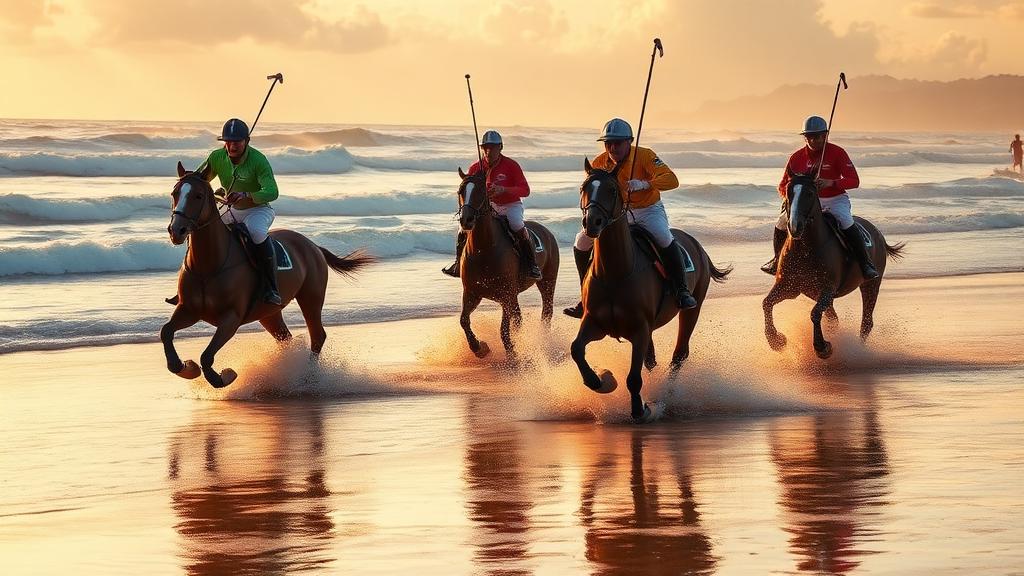
Beach polo is one of the sport's most spectacular variants. Played on compacted sand rather than grass, with a reduced field and smaller teams, it combines the core skills of outdoor polo with a faster pace, greater spectator visibility, and a glamorous social atmosphere that has made it a fixture of the global polo calendar. Understanding how beach polo rules differ from the traditional game — and why those differences exist — is essential for anyone looking to compete or simply appreciate the sport.
Origins and Growth
Beach polo originated in Brazil in the 1990s, developed by players seeking to extend the polo season and attract urban audiences. The format spread rapidly to the Gulf, Europe, and North America, driven by its visual appeal and accessibility. Today, major beach polo events take place in Dubai, Miami Beach, Cannes, Mykonos, São Paulo, and beyond. According to the FIP, beach polo is now one of the fastest-growing variants of the sport globally, with dedicated tournaments in more than 25 countries.
The Playing Surface
The beach polo field is fundamentally different from a grass polo ground:
The enclosed board system is critical — it eliminates the "out of play" scenarios common in outdoor polo and creates a continuous, high-intensity game.
Team Composition
Beach polo is played 3-a-side, compared to the 4-a-side format of outdoor polo:
The three-player format creates a more open game with greater individual responsibility and more space per player — ideal for showcasing individual skill to spectators.
The Ball
The use of an inflatable polo ball is one of the defining characteristics of beach polo and has significant tactical implications:
Tournament organisers typically provide certified beach polo balls. Players may not substitute personal balls.
Duration of Play
Beach polo matches are shorter than traditional polo:
Total match time including breaks is approximately 30 to 40 minutes, making beach polo ideal for spectator events and television broadcasts.
Scoring
Scoring in beach polo follows the same principle as outdoor polo — a goal is scored when the ball passes through the uprights of the goal. However:
Fouls and Penalties
Beach polo applies a simplified version of the traditional polo foul system:
Right of Way
The fundamental right-of-way rule applies unchanged: a player riding on the [line of the ball](/glossary/line-of-the-ball) has right of way; [crossing](/glossary/crossing) that line dangerously is a foul. Given the board-enclosed smaller field, the speed and frequency of right-of-way conflicts is higher in beach polo, requiring particularly sharp umpiring.
Penalty Shots
The simpler four-penalty structure compared to outdoor polo's more graduated scale reflects the sport's preference for clarity and pace in a spectator-focused format.
Yellow and Red Cards
Beach polo has adopted a card system borrowed from football (soccer):
Horse Welfare and Safety Rules
Sand is harder on horse joints than grass, and the beach environment presents specific welfare considerations:
Governing bodies organising beach polo events are expected to provide on-site veterinary support. Any horse showing signs of distress or lameness must be withdrawn immediately.
Horse Preparation for Sand
Sand polo requires horses with specific physical conditioning:
Umpiring in Beach Polo
Beach polo matches are typically umpired by two mounted umpires (the same structure as outdoor polo) with a referee on the sideline for disputed calls. However, the compactness of the beach polo field and the entertainment-oriented format means umpires are expected to:
At the highest level beach polo events, video review is available for disputed penalty decisions.
Tournament Structure
The global beach polo calendar includes several tiers:
Premier Tier
The Dubai Polo Gold Cup Beach Polo and the Miami Beach Polo World Cup are generally considered the sport's premier events. Both attract [handicap](/glossary/handicap)-8 to handicap-12 (in team terms) players and significant prize purses. Admission requirements typically include:
Regional and Club Tier
Hundreds of smaller beach polo events operate globally, from one-day charity events to multi-day competitive tournaments. Many welcome players with little to no beach polo experience, providing instructional sessions before the competitive rounds.
Getting Started in Beach Polo
If you're an existing polo player interested in beach polo, the transition is straightforward:
1. **Contact your national polo association** for a list of sanctioned beach polo events and whether clinics are available
2. **Prepare your horse** — specific conditioning for sand is important; consult your trainer and vet before entering
3. **Get the right equipment** — a beach polo [mallet](/glossary/mallet) is the same as a standard outdoor mallet; the club may supply balls
4. **Adjust your game** — shots need to be more controlled on sand; the inflatable ball rewards placement over power
For players new to polo, beach polo is actually an accessible entry point due to the larger ball and slower pace. Many clubs offer beginner beach polo sessions during coastal seasons.
For more information on getting involved in polo more broadly, see our [learn polo](/learn) guide and our [polo clubs](/clubs) directory.
Beach Polo vs. Arena Polo
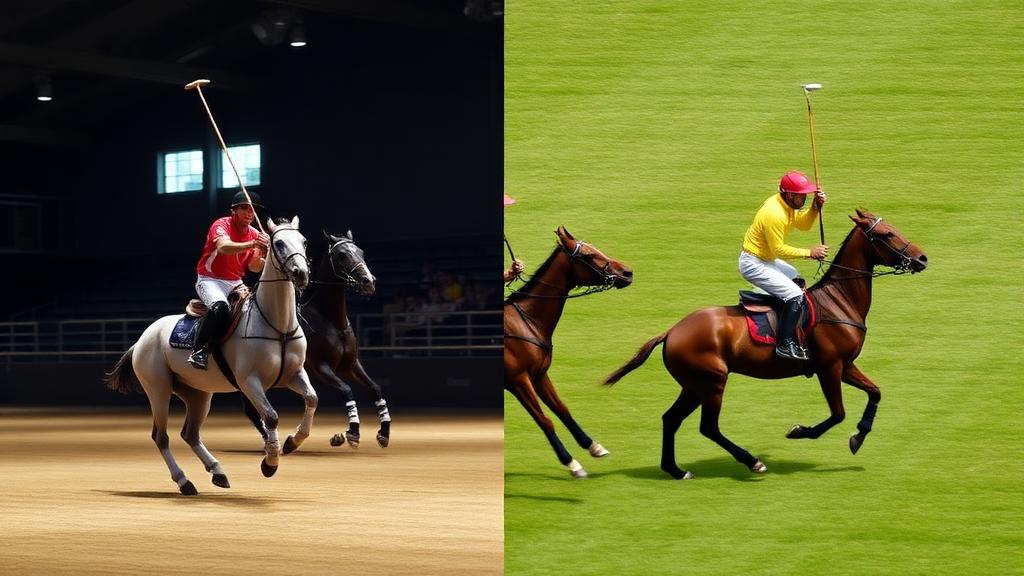
Beach polo is sometimes confused with arena polo, though the two variants differ significantly:
| Feature | Beach Polo | Arena Polo |
|---|---|---|
| Surface | Sand (outdoors) | Dirt or synthetic (indoors) |
| Ball | Inflatable, 12-13 inches | Inflatable, similar size |
| Team size | 3-a-side | 3-a-side |
| Field | 100m x 50m, boards | 90m x 36m typical, boards |
| Setting | Coastal/outdoor | Indoor/covered arena |
Both variants use the three-a-side format and inflatable ball, but beach polo is an outdoor event with open-air atmosphere, while arena polo is typically an indoor winter sport.
FAQs
Is beach polo a recognised official sport?
Yes. The FIP recognises beach polo as a legitimate variant, and many national polo associations sanction beach polo events under their regulatory frameworks.
Do I need special horses for beach polo?
Not specifically, but horses must be conditioned to sand and comfortable in beach environments. Horses with existing leg issues may find sand harder than grass.
How many players per team in beach polo?
Three mounted players per team, compared to four in outdoor polo.
Can beginners play beach polo?
Yes, particularly at club-level social events. The larger ball and shorter chukkas make it more accessible to newer players.
What does the inflatable ball feel like to hit?
It requires a softer, more controlled shot than the hard outdoor ball. Experienced players often describe it as rewarding precision over power.
Are beach polo rules the same worldwide?
Core rules are largely standardised, but tournament-specific variations exist. Always confirm local rules with the tournament director before competing.
What safety equipment is required?
The same basic requirements as outdoor polo: approved helmet, kneeguards, and boots. Sunscreen and eye protection are strongly recommended in the beach environment.
Where are the biggest beach polo events?
Dubai, Miami Beach, Cannes, and São Paulo host the most prestigious annual beach polo tournaments. See our [tournaments](/tournaments) section for the full international calendar.