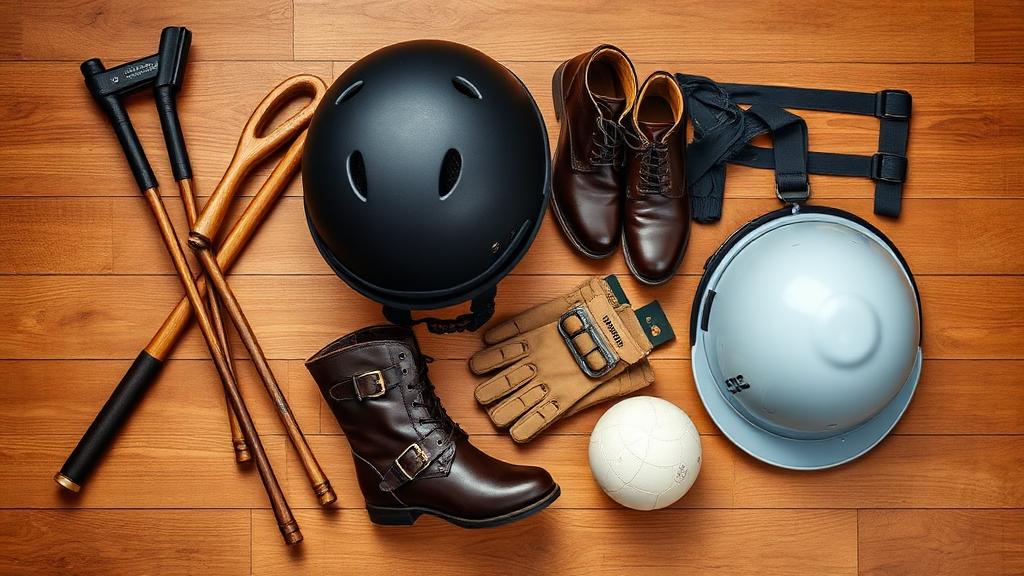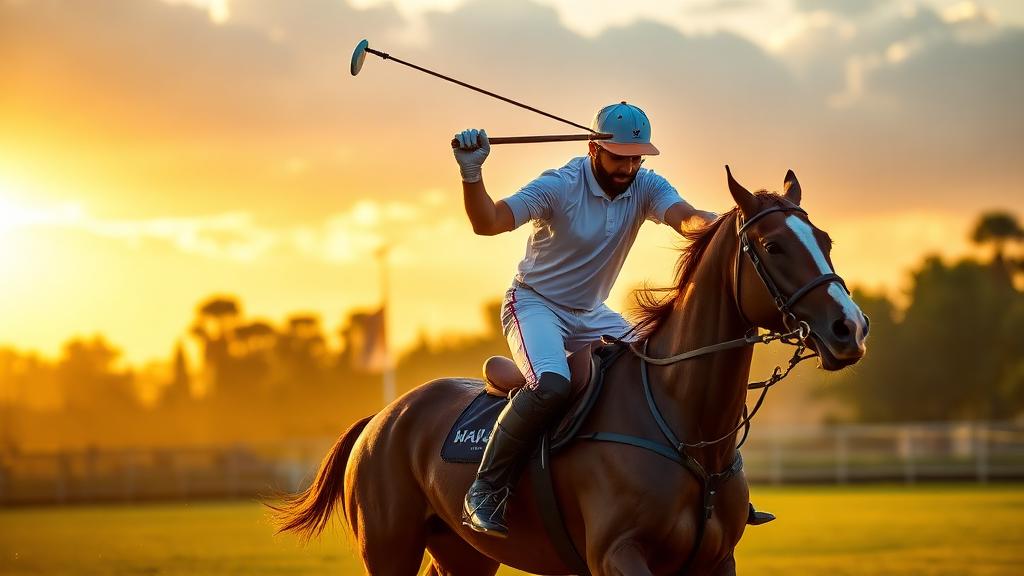
Best Polo Mallets by Handicap Level: A Buyer's Guide
A detailed buyer's guide to polo mallets covering shaft materials, head weights, flexibility, and specific recommendations for players at every handicap level.
Best Polo Mallets by [Handicap](/glossary/handicap) Level: A Buyer's Guide
The polo [mallet](/glossary/mallet) is deceptively simple in appearance — a wooden shaft with a wooden head — but it is a precision instrument that, in the right hands, delivers balls over 100 metres with extraordinary accuracy. The variety of mallets available and the range of specifications involved can be confusing for new players and even for experienced ones who have never looked closely at the technology behind their equipment.
This guide covers every significant specification variable in polo mallet design, explains how each variable affects performance, and provides specific guidance on what to look for at each handicap level. For background on overall equipment investment decisions, see our [equipment guide](/equipment).
Understanding Mallet Anatomy
Before discussing specific recommendations, it is worth establishing a common vocabulary for mallet components.
The Head
The head is the cylindrical wooden block at the end of the mallet that contacts the ball. Polo mallet heads are cylindrical (unlike croquet mallets, which have flat faces), and the end grain of the cylinder contacts the ball. This end-grain contact is what gives the polo mallet its distinctive feel and allows the range of shots that the sport requires.
**Head material**: Traditionally hardwood — tipa and ciricote are most common in Argentine production. Tipa is the standard; ciricote is denser, heavier, and used for higher-weight heads.
**Head weight**: Measured in ounces. Typical range is 6 to 8 ounces for most players, with lighter heads (5–6 oz) used by some for increased swing speed and heavier heads (7–8+ oz) used by players seeking more mass for power shots. Head weight is one of the most important specification choices.
**Head length**: Standard polo heads are approximately 8.5 to 9.5 inches in length. Longer heads offer a slightly larger "sweet spot" margin; shorter heads are more compact for tight mallet work.
**Head diameter**: Standard is approximately 2.25 inches (57mm). Some manufacturers vary this slightly.
The Shaft
The shaft connects the head to the grip and is the component most responsible for the mallet's feel, flexibility, and durability.
**Cane (traditional)**: Traditional polo mallet shafts are made from Malacca cane — a palm native to Southeast Asia. Malacca is flexible, strong, and has a natural whip that experienced players learn to use for power generation. Quality Malacca cane has straight grain and is free from nodes (joints in the cane) along its playing length.
**Graphite composite**: Modern graphite shafts are lighter, more consistent in flex profile, and more durable than cane. They have overtaken cane in popularity among many professional and advanced amateur players. The trade-off is a slightly different feel — graphite has less of the natural "live" sensation that experienced cane users describe.
**Fibreglass**: Some entry-level and mid-range mallets use fibreglass shafts. These are durable and low-cost but lack the performance characteristics of quality cane or graphite.
**Bamboo**: An eco-friendly alternative gaining traction in some markets. Performance is comparable to cane in many respects.
Shaft Flexibility
Mallet shafts are categorised by their flexibility or "flex rating":
Flex is not simply more or less in one dimension — the profile of the flex (where along the shaft it bends most) also varies between manufacturers.
Shaft Length
Shaft length is measured from the top of the grip to the bottom of the head. Standard range is 48 to 54 inches.
The correct shaft length depends on the rider's height, their mounted position, and the horses they ride. A general starting guideline:
These are starting points only. Personal preference, horse size, and playing style all influence optimal length. Most experienced players own mallets of two or three lengths to cover different game situations.
The Grip
Mallet grips are typically wrapped in leather, rubber, or synthetic materials. Personal preference and the conditions (wet or dry) guide grip choice. Most players replace grips periodically as they wear and lose tackiness. Replacement grips are inexpensive and widely available.
Recommendations by Handicap Level
-2 to 0 Goals: Beginners
**What to prioritise**: Durability, forgiveness, consistent feel.
At this stage, you are developing your swing mechanics. The mallet is less important than instruction and repetition. However, using a consistently performing mallet from the beginning allows your muscle memory to develop accurately.
**Shaft**: Fibreglass or lower-grade Malacca cane. Graphite is wasted at this stage. Stiffer flex is better — you want predictable response while you are learning.
**Head weight**: 6.5 to 7 ounces is a good starting range. Avoid extremes — a very light head requires precise timing to use effectively; a very heavy head is tiring and can affect technique.
**Length**: Start with the guideline range for your height and adjust based on comfort.
**Buying advice**: Club mallets or entry-level brands are entirely appropriate. Spending £200 on a professional graphite mallet at this stage is premature. Budget £40–£80 per mallet for beginner-appropriate options.
0 to 2 Goals: Developing Club Players
**What to prioritise**: Finding your preferred specifications, investing in consistent quality.
At this level, you are beginning to have opinions about your mallet. You notice when a mallet feels right and when it does not. This is the time to start experimenting with specifications and investing in your own set.
**Shaft**: Good quality Malacca cane or entry-level graphite. The decision often comes down to personal feel preference — try both if possible before committing. Moderate flex is appropriate.
**Head weight**: Begin exploring your preference. 6.5 to 7 ounces remains appropriate for most players. Some 2-[goal](/glossary/goal) players begin experimenting with slightly lighter heads (6–6.5 oz) as their swing speed develops.
**Length**: By this stage you should have a clear sense of your preferred length from club mallet use.
**Buying advice**: Invest in two to three mallets of slightly different lengths. Budget £80–£150 per mallet for quality cane, or £100–£200 for quality graphite.
2 to 4 Goals: Competitive Club Players
**What to prioritise**: Performance optimisation, matching mallet to position and shot type.
At this level, your mallet specifications directly affect your competitive performance. You are playing in tournaments, hitting at pace, and developing a full repertoire of shots. Mallet selection becomes a genuine tactical decision.
**Shaft**: Quality Malacca cane (ideally "tournament grade" — straight grain, no nodes) or performance graphite. More experienced players begin exploring flexible cane here.
**Head weight**: This varies by position and role. Offensive players (number 1s and 2s) who prioritise swing speed for long [offside](/glossary/offside) shots may prefer lighter heads (6–6.5 oz). Players in 3 and back positions who focus on defensive clearances and long drives often prefer slightly heavier heads (7–7.5 oz) for power.
**Head length and type**: Some 2 to 4 goal players begin exploring premium head options — longer heads for a wider sweet spot, or ciricote heads for a different density feel.
**Buying advice**: Invest in a set of three to five mallets covering different situations. Budget £100–£200 per quality cane mallet, or £150–£250 for quality graphite. Some professional Argentine mallet makers offer excellent value at this price point.
4+ Goals: Professional and Semi-Professional
**What to prioritise**: Tailored specifications, premium materials, consistency across a set.
High-goal players have very specific preferences that reflect years of experience and a refined understanding of how equipment affects their performance in different match situations. Many professionals have a direct relationship with a mallet maker who produces their sticks to a personalised specification.
**Shaft**: Tournament-grade Malacca cane or high-end graphite. Cane selection at this level involves choosing shafts by hand — testing flex, weight, and balance before acceptance. The cane supply chain matters here: quality Malacca suitable for tournament-grade shafts is increasingly scarce and commands a premium.
**Head weight**: Precisely calibrated to individual preference. Some elite players have heads custom-weighted to within a fraction of an ounce.
**Custom work**: Head-to-shaft angle (the angle at which the head is attached to the shaft), spur (the carved transition between shaft and head), and head surface finish are all adjusted to professional preference.
**Buying advice**: Direct relationships with Argentine mallet makers (often based in Buenos Aires or the Pampas region) provide the best value and most tailored options. Sets of six to ten mallets covering different situations and lengths are typical for professional players.
Key Mallet Brands and Makers
Argentine Makers
Argentina's mallet-making tradition is the foundation of the global market. Some names widely respected by players:
International Brands
Caring for Your Mallets
Cane Shafts
Heads
Shafts and Heads Together
The joint between head and shaft is the most failure-prone point. Check regularly for looseness — a wobbly head affects accuracy significantly. Re-epoxy as needed or have a professional repair done.
Frequently Asked Questions
What length mallet should I start with?
Start with the guideline for your height and experiment from there. Most beginners start approximately one size shorter than they eventually settle on — a longer shaft provides more leverage but requires more precise timing. Build up gradually.
Is graphite always better than cane?
Not necessarily. Graphite is more consistent and durable; quality Malacca cane has a "liveness" and natural whip that many experienced players strongly prefer. Both are excellent materials at their best. Try both before committing to a preference.
How many mallets do I need?
Beginners: 1–2. Developing club players: 2–4. Tournament players: 4–6. Professional players: 6–10+. The need for multiple mallets reflects different lengths for different situations and having reserves when a mallet breaks.
Can I use the same mallet for practice and matches?
Yes, and this is generally preferable for consistency. Some players have a set of older mallets for practice and newer ones for matches, but this can create a disconnect in feel.
What is the polo ball hitting surface made of?
The polo ball is made of high-impact plastic (modern balls) or traditionally bamboo root. Modern balls are harder than older designs, which affects mallet wear and contact feel compared to equipment used 30 years ago.
How do I know when to replace a mallet?
Replace when: the shaft has a significant [crack](/glossary/crack) or is noticeably bent, the head wobbles even after re-gluing, the head surface has worn unevenly and cannot be restored by sanding, or the shaft has lost its characteristic flex profile.
Can I mix different shaft types in my mallet set?
Yes. Many players have a mix of cane and graphite in their bags, using each for different situations or conditions (graphite often performs more consistently in wet conditions).