From Eventing to Polo: A Transition Guide for Equestrians
Event riders have exceptional foundations for polo — courage, cross-country riding skill, fitness — but transitioning successfully requires understanding what must change.
From Eventing to Polo: A Transition Guide for Equestrians
Event riders occupy a distinctive position among equestrians considering polo. The demands of eventing — cross-country jumping at speed, dressage precision, stadium jumping accuracy, and the extraordinary fitness and courage required to combine all three — produce riders with a foundation that translates well to polo in many respects. The forward seat, the fitness base, the experience of riding at speed in open country, the feel for a horse's stride and balance — all of these carry across.
Yet eventing and polo are different enough that a confident four-star event rider can find polo humbling at first. This guide addresses the transition specifically, covering what event riders bring, what they need to adapt, and how to make the crossover efficiently. For general polo beginner information, see our [learn polo](/learn) guide.
What Event Riders Bring to Polo
Cross-Country Courage and Forward Riding
Perhaps the most valuable single thing an event rider brings to polo is the courage and comfort to ride fast in open ground. Many people who take up polo struggle with the psychological challenge of fast riding outside an enclosed arena — the instinct to slow down, to hesitate. Event riders have trained this instinct out in one of the most demanding equestrian contexts imaginable. Fast ground on a horse is not frightening for an experienced eventer; it is natural.
This forward mindset — riding positively toward the objective, not holding back — is fundamental to polo. Players who ride defensively or cautiously are easier to mark, less effective at positioning, and generate less power in their shots. Event riders arrive with the opposite instinct, which is a significant advantage.
Balance in Motion
Event riders develop exceptional balance across varied gaits and terrain. The ability to maintain a stable upper body position while a horse negotiates terrain changes, turns, and pace variations — essential for cross-country — directly translates to maintaining the balanced upper body position required for polo shots.
The polo swing is made from a moving platform. Poor balance means the swing plane changes with every horse stride. Excellent balance means the shot is consistent regardless of what the horse is doing beneath the rider. Event riders typically have this balance already.
Fitness
Eventing is one of the most physically demanding equestrian disciplines. Cross-country alone requires sustained aerobic fitness, core stability, upper body endurance, and the fast-twitch capacity for rapid decision-making. This fitness level is an excellent foundation for polo, which is itself physically demanding. See our [polo fitness guide](/learn) for specifics on polo fitness requirements.
Horse Sense
Years of competitive eventing builds an acute feel for horse movement, attitude, and energy levels. This is enormously valuable in polo, where reading your horse's state — whether it is tiring, whether it is tense, whether it is comfortable in its footing — directly affects both performance and safety.
What Must Change for the Transition to Polo
The One-Handed Rein
The most technically significant change from eventing to polo is managing the reins with one hand. Event riders use two hands throughout — the balanced two-handed rein position is foundational to eventing technique. In polo, the non-[mallet](/glossary/mallet) hand holds all reins. This requires:
The one-handed transition is genuinely challenging for experienced two-handed riders. The muscle memory of two-handed riding is deeply ingrained. Budget several weeks of deliberate practice before expecting comfortable one-handed control.
The Polo Seat vs the Forward Seat
Event riders use a forward seat — weight forward, shorter stirrups, upper body angled toward the horse's neck, designed for jumping and cross-country. The polo seat is different:
Many event riders initially struggle with sitting more upright in polo — the ingrained habit of the forward seat pulls them toward the horse's neck at speed. The upright polo seat allows the body rotation and arm swing needed for polo shots. Adjusting requires conscious effort over many sessions.
Turning Without Jumps
Eventing lines are largely determined by jump positions and course design. Polo lines are determined by play, and the turns required — sharp, fast direction changes at full gallop — are different from anything in eventing. The polo horse must be able to turn tighter and faster than any jump approach, and the rider must signal these turns effectively with one hand.
Event riders often initially under-steer in polo — accustomed to the sweeping approaches of cross-country where sharp turns are obstacles to be avoided, not the fundamental movement of the game.
Reading the Game
Eventing has no equivalent to polo's dynamic, multi-player game reading. Cross-country is an individual performance against a course; polo involves reading four opponents and three teammates simultaneously while managing horse and mallet. This game intelligence is learned in polo, not imported from eventing. Expect this to be the longest element of the transition — it takes a full season or more to develop reliable polo awareness.
The Mallet
There is no equivalent to the polo mallet in eventing. The mechanics of swinging a mallet while riding — timing the swing to the horse's stride, controlling the mallet arc without destabilising the riding position, developing range of shots — must be built from scratch. Event riders have the balance and coordination for this; they simply have not used it in this way before.
Practical Steps for Event Riders Entering Polo
Start at the Wooden Horse
Despite your eventing background, begin at the wooden horse for mallet mechanics. The mallet is genuinely new and the wooden horse is the most efficient way to build initial swing habits without horse management competing for attention.
Use a Quiet, Reliable Horse Initially
Even as an experienced rider, use the quietest, most reliable horses available during your polo introduction. The demands of managing the mallet and learning game awareness are sufficient without adding the challenge of a difficult horse. A well-trained polo school horse will teach you things about polo movement that your eventing horses cannot.
Commit to the Fundamentals
The biggest mistake experienced equestrians make when starting polo is skipping or rushing through fundamentals because the riding component feels easy. The mallet mechanics, the one-handed rein, the polo seat — these need deliberate attention even when the riding itself feels comfortable.
Play [Arena Polo](/glossary/arena-polo) Initially
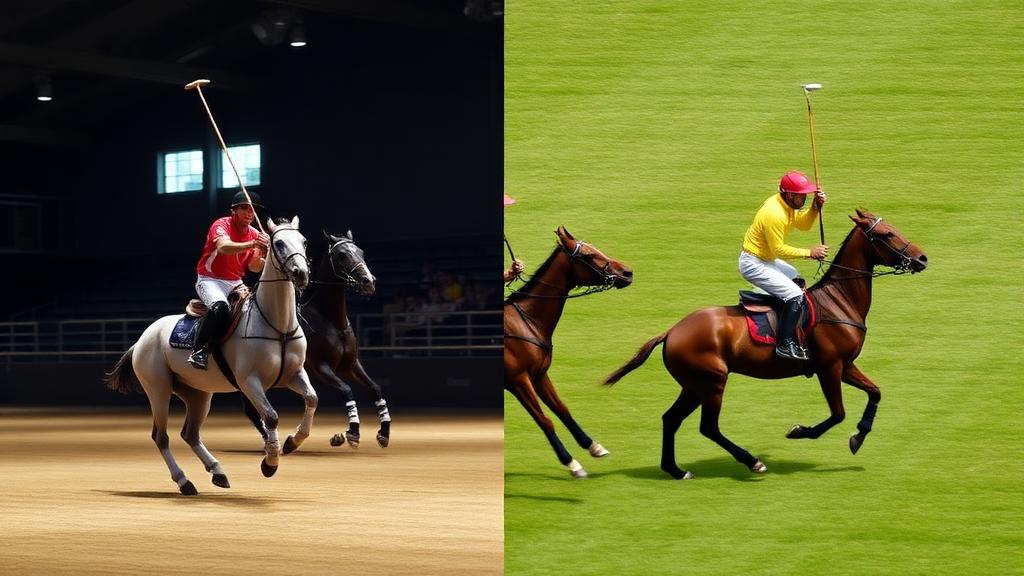
Arena polo's smaller ground, slower pace, and enclosed environment makes the game easier to read in the initial learning phase. Starting in arena polo before moving to full grass polo is a well-established route for adult learners. See our [arena polo guide](/learn) for more.
Find a Polo Coach
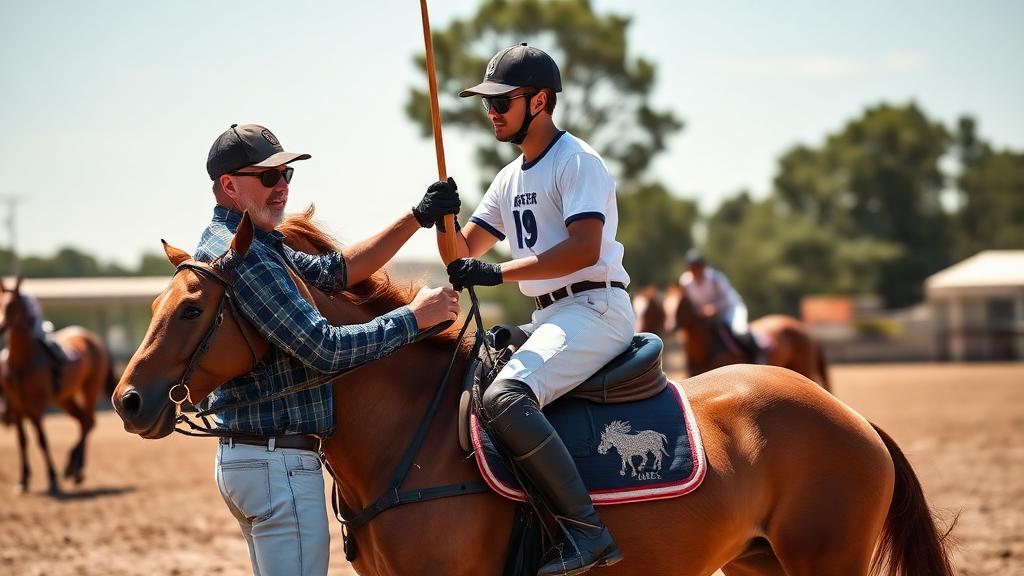
Even experienced equestrians benefit significantly from polo-specific coaching. A polo coach will see things about your seat, your swing, and your game awareness that you cannot identify from inside. If your club has a professional or teaching player available, invest in coaching time during the transition period.
Timeline Expectations
A confident event rider making a serious transition to polo can reasonably expect:
**Months 1–2**: Comfortable stick-and-ball practice, beginning to manage the one-handed rein, basic shot competence at slow speeds.
**Months 3–4**: Competent arena polo. Beginning to read the game, understanding positioning, reliable off-side forehand.
**Months 5–6**: Ready for introductory club-level grass polo. Developing range of shots, improving one-handed rein confidence.
**Months 7–12**: Club-level play. Developing game awareness, multiple shot types, understanding of polo tactics.
This timeline assumes consistent practice — several sessions per week. Occasional play will extend each phase significantly.
Frequently Asked Questions
Will my eventing horses be suitable for polo?
Typically not directly. Eventing horses are trained and conditioned for a very different discipline. Polo horses need specific polo training — they must be comfortable with the mallet, used to the close-quarters contact of polo, and trained to respond to one-handed rein signals. Your eventing horse would need substantial retraining before being a usable polo horse, and some would never take to it. Use club polo horses while learning.
Is polo more dangerous than eventing?
This is genuinely difficult to compare. Eventing carries significant injury risk, particularly at cross-country. Polo involves different risks — mallet contact, horse-to-horse contact, falls at gallop. Both are high-risk sports by the standards of most sports. The injury profile differs more than the overall risk level.
Do event riders typically progress to polo faster than non-riders?
Yes, significantly. The riding foundation of an experienced eventer means that the riding component of polo is learned in a small fraction of the time required for a non-rider. The game and mallet components still take full time to develop, but the overall timeline to functional polo is compressed substantially.
Should I ride different horses for polo lessons than for eventing?
If you are transitioning seriously to polo, yes — use horses that are specifically trained for polo for your polo sessions. Cross-training horses between disciplines is sometimes done but creates confusion in the horse about expected behaviours.
What is the biggest advantage event riders have in polo?
The forward, positive riding attitude — the willingness to go fast and commit to a line without holding back. This is the hardest thing to teach new polo players who come from non-sport equestrian backgrounds, and event riders have it already.
Can I compete in polo tournaments quickly after transitioning?
At 0-[goal](/glossary/goal) club tournaments, event riders who commit to the transition can sometimes compete within their first season. The timeline depends on the frequency and quality of practice. Do not rush tournament entry — play in practice chukkers until your game is solid enough to be a useful teammate rather than a liability.