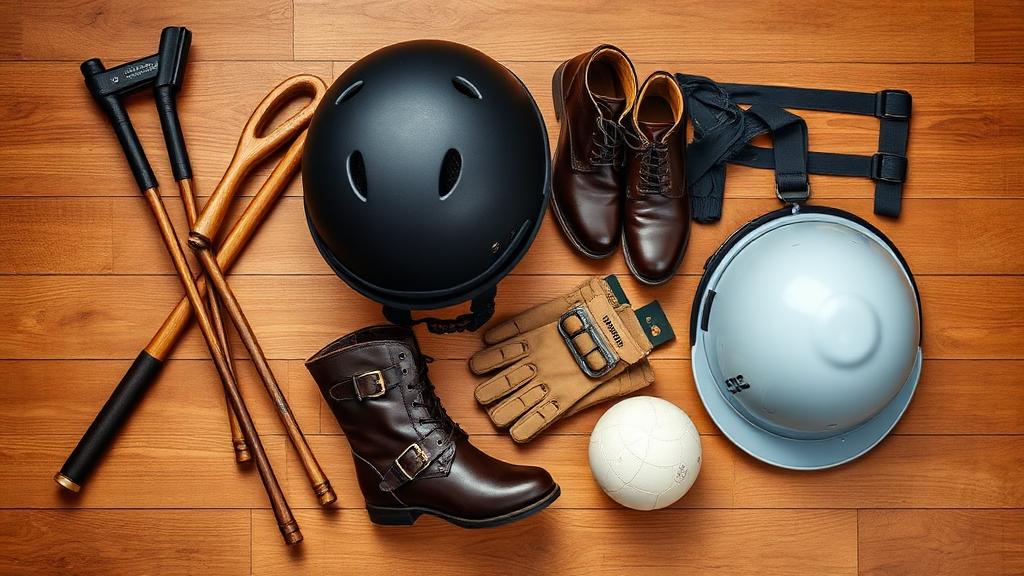
Polo Boots Guide: What to Buy at Every Level
From your first pair of brown leather boots to custom-made competition boots, this guide covers everything you need to know about polo footwear at every stage of your playing career.
Polo Boots Guide: What to Buy at Every Level
Polo boots are one of the most important pieces of equipment you'll buy. The right boots protect your ankles and lower legs, provide the grip you need in the stirrups, and can significantly affect your comfort over a long day of play. The wrong boots can cause blisters, restrict movement, and even contribute to injuries.
Understanding Polo Boot Design
Polo boots have several distinctive features that set them apart from standard riding boots:
Height
Polo boots extend to just below the knee — higher than paddock boots but similar to standard tall riding boots. The height protects the calf from [mallet](/glossary/mallet) strikes and from contact with other horses during ride-offs.
Reinforcement
The inner leg and knee area are typically reinforced with extra layers of leather. This reinforcement absorbs impacts from ride-offs (legal body contact between horses) and protects against mallet contact.
Zipper vs. Pull-On
Modern polo boots almost universally feature a **back zipper** for ease of putting on and removing. Traditional pull-on boots exist but are increasingly rare. The zipper should be robust and protected by a leather flap to prevent snagging.
Sole
Polo boot soles are smooth or have minimal tread. This is a safety feature — a boot that catches in the stirrup during a fall is extremely dangerous. The slight heel (typically 1–1.5 inches) prevents the foot from sliding through the stirrup.
Leather Quality
Polo boots are made from cowhide leather, ranging from basic corrected grain (entry-level) to full-grain premium leather (high-end). The leather must be durable enough to withstand impacts, flexible enough for ankle movement, and water-resistant enough for dewy morning practice.
Boots by Playing Level
Absolute Beginner (First 1–10 Lessons)
**Don't buy polo boots yet.** For your first lessons, wear any boot with a small heel — paddock boots, short riding boots, or even leather work boots. You need to experience the sport before investing in specialised equipment.
**Budget**: US$0 (use what you have) or US$50–$100 for basic paddock boots
**Recommendation**: Many polo schools provide or loan boots for beginners
Regular Beginner (10–30 Lessons, First Season)
Now it's time for your first pair of polo boots. At this stage, prioritise comfort and value — you're still learning, and your boots will take a beating.
**Budget**: US$150–$350
**Recommended brands**:
**Key features to look for**:
Intermediate Player (1–3 Seasons, 0–2 [Goal](/glossary/goal))
You're playing regularly, possibly in tournaments. You need boots that perform well and last. This is where investing in quality starts to pay off.
**Budget**: US$300–$600
**Recommended brands**:
**Key features**:
Advanced / Competitive Player (3+ Seasons, 2+ Goal)
At this level, your boots need to perform. You're playing harder, riding faster, and competing in environments where equipment matters.
**Budget**: US$500–$1,200
**Recommended brands**:
**Key features**:
Professional / High-Goal Player
Professionals typically wear custom-made boots, often from Argentine bootmakers. Custom boots are made from measurements and last (foot mold) specific to the player.
**Budget**: US$800–$2,000+
**Preferred makers**: Casablanca, Beron, custom Argentine bootmakers
**Features**: Bespoke fit, premium leather selection, personalised reinforcement patterns
Boot Care and Maintenance
Good boot care dramatically extends boot life:
1. **After every match**: Wipe off dirt and sweat with a damp cloth. Allow to dry naturally — never near direct heat
2. **Weekly**: Apply leather conditioner (Lexol, Bickmore, or similar). This keeps the leather supple and prevents cracking
3. **Monthly**: Polish with a quality boot cream. This protects the surface and maintains appearance
4. **Storage**: Use boot trees or stuff with newspaper to maintain shape. Store upright in a cool, dry place
5. **Repairs**: Address stitching issues, sole separation, or zipper problems promptly. A good cobbler can extend boot life significantly
Common Mistakes
When to Replace
Replace your boots when: