Polo Helmets: Safety Standards, Brands, and Buying Guide
Your polo helmet is your most important piece of safety equipment. This guide covers international safety standards, top brands, fit, lifespan, and face guard options.
Polo Helmets: Safety Standards, Brands, and Buying Guide
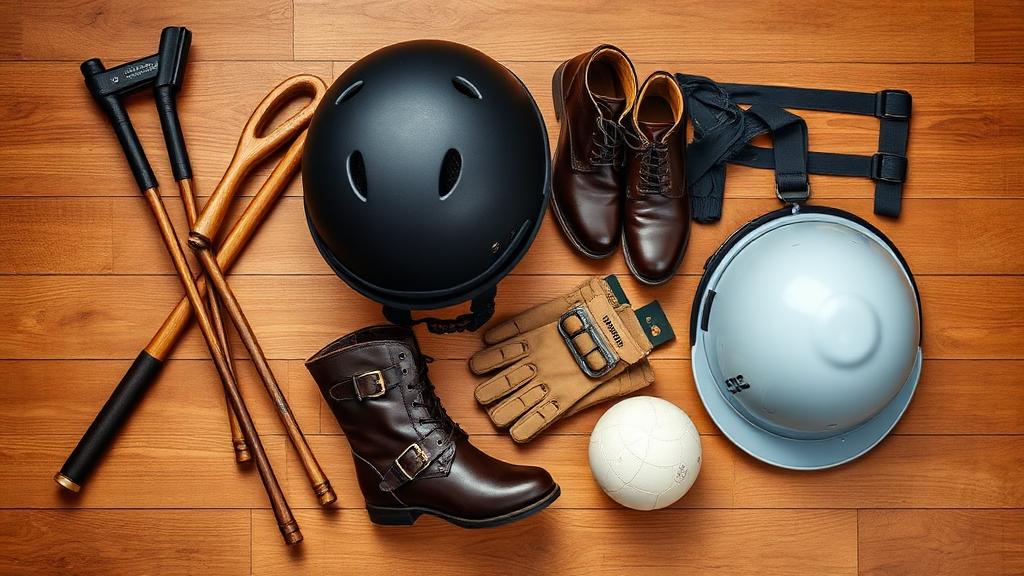
A polo helmet is not a fashion accessory. It is the single most important piece of safety equipment you will wear on a polo [pony](/glossary/pony), and the one area where cutting corners for cost or aesthetic reasons is genuinely dangerous. Falls from polo ponies — even at low speeds — can cause serious head injuries. A certified, correctly fitted helmet absorbs impact energy in ways that can literally be the difference between a bruise and a traumatic brain injury. See our full [polo equipment guide](/equipment) for a complete list of kit you'll need.
This guide covers everything you need to know to make the right helmet decision.
Safety Standards — Understanding the Certification Landscape
Polo is governed by different bodies in different countries, and each body specifies its own minimum helmet safety standards. Understanding which standard applies to you is the starting point.
UK — HPA Requirements
The **Hurlingham Polo Association (HPA)** requires all players to wear helmets certified to one of the following standards:
**Face guards**: The HPA requires face guards for players under 18 in competitive polo. For adults, face guards are strongly recommended but not always mandatory depending on the tournament. Always check the specific event requirements.
USA — USPA Requirements
The **United States Polo Association (USPA)** requires helmets certified to:
**Important**: Some helmets certified to UK/European standards (PAS015, EN1384) may not be NOCSAE certified. If you are playing in the USA, verify your helmet has NOCSAE certification.
Australia — ASNZs
Australian polo follows the **AS/NZS 3838** equestrian helmet standard. Most internationally recognised polo helmets also hold this certification.
Argentina — AAP Requirements
The **Asociación Argentina de Polo (AAP)** operates under international equestrian standards. ASTM and EN1384 certified helmets are generally accepted.
FIP International Events
For international FIP events, helmets must meet one of the major international standards (EN1384, ASTM F1163, NOCSAE). Always verify specific requirements with the event organisers.
How Helmets Work — Why Certification Matters
Understanding the physics helps explain why certification matters. In a fall, your head impacts a surface. A certified helmet dissipates this impact through the controlled deformation of an EPS (expanded polystyrene) foam liner — the same material used in cycling helmets. The outer shell distributes the force; the liner absorbs it.
**A helmet that does not meet current standards** may lack adequate liner thickness, may use lower-density foam, or may have a shell construction that cracks before adequately distributing force. The visual difference between a certified and uncertified helmet is often minimal. The safety difference can be significant.
**Replacement after impact**: A helmet that has sustained a significant impact — even if it looks undamaged — should be replaced. EPS foam deforms plastically; once compressed by impact, it cannot recover its energy-absorbing properties. This is not a marketing gimmick — it is physics.
Helmet Types for Polo
Traditional Polo Helmet
The polo-specific helmet has a distinctive aesthetic derived from its origins — typically a leather or faux-leather outer shell with a reinforced EPS interior, a chinstrap, and a brim. This is the style worn in most high-[goal](/glossary/goal) polo.
Variants include:
Jockey-Style Helmets
Some polo players, particularly in the USA, wear helmets derived from racing jockey designs. These typically have excellent safety certification and a streamlined profile, though they lack the traditional polo aesthetic.
Cross-Country/Eventing Helmets
Helmets certified to EN1384 or PAS015 and designed for cross-country eventing are also widely used in polo. These tend to have more ventilation than traditional polo helmets (useful in hot climates) and often have integrated face guard attachment points.
Top Polo Helmet Brands
Charles Owen (UK)
The most respected polo helmet brand in England and the wider polo world. Charles Owen helmets meet multiple international standards simultaneously (PAS015, EN1384, ASTM), are made in the UK, and have a long track record of protective performance.
**Recommended for polo**: Charles Owen GR8, Charles Owen MIPS polo helmet (with MIPS rotational impact protection).
**Price range**: £200–450.
Kask (Italy)
Italian brand known for cycling and equestrian helmets. The Kask Zenith is popular in polo markets for its lightweight design and excellent certification. MIPS-equipped versions are available.
**Price range**: £200–400.
Gatehouse (UK)
Long-established UK equestrian helmet brand with polo-specific models. Good quality at slightly lower price points than Charles Owen.
**Price range**: £150–350.
One K (USA)
Popular in the US polo market, particularly at Wellington. Good NOCSAE certification and a wide range of styles.
**Price range**: USD 200–400.
The Face Guard Question
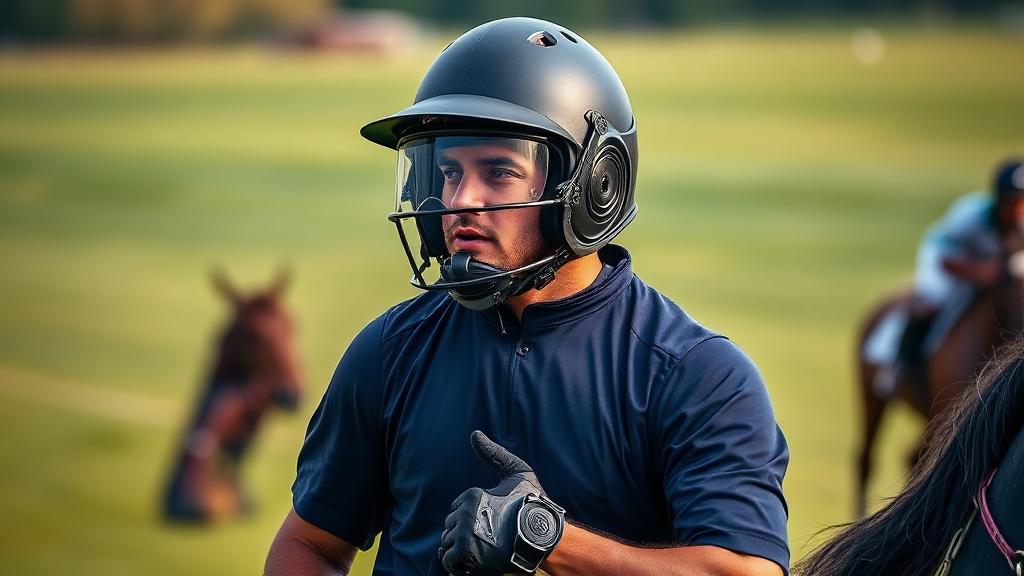
Face guards protect the face from [mallet](/glossary/mallet) contact — a common cause of facial injuries in polo, particularly for beginners (whose mallet control is less precise) and for those playing in tight, competitive situations.
**When face guards are mandatory**: Under-18 players (HPA rule); many clubs require them for beginners regardless of age.
**When to consider a face guard regardless of requirements**: If you are a beginner, playing in [arena polo](/glossary/arena-polo) (closer quarters), or if you have had previous facial injuries.
**Types**: Wire cage (most protection, slightly obscures vision); polycarbonate visor (cleaner vision, lighter weight); hybrid designs.
Most certified polo helmets accept optional face guards — check compatibility before purchasing.
Fitting Your Helmet
A helmet that does not fit correctly does not protect correctly. Fitting process:
1. **Measure your head circumference** with a tape measure just above your eyebrows.
2. **Select the size range** that matches — most manufacturers provide clear size guides.
3. **Put on without strap**: The helmet should sit level on your head, approximately two fingers above your eyebrows. It should not rock side-to-side or front-to-back when you push firmly.
4. **Check pressure**: Even pressure around the circumference. No pressure points — these will become headaches during play.
5. **Strap**: Chinstrap should allow two fingers between strap and chin when fastened.
If in doubt between sizes, try both — a slightly smaller helmet (within range) that fits snugly is better than one that moves.
Your helmet is not an area to economise. Buy the best you can afford, ensure it meets your governing body's current standard, replace it after any significant impact, and replace it every 3–5 years regardless of visible condition as foam degrades over time. For more on safety equipment and [polo insurance](/polo-insurance), see our dedicated guides.