Polo Knee Guards and Protective Gear: Complete Buying Guide
Everything you need to know about polo protective equipment — from knee guards and helmets to boots and gloves — including top brands, sizing, and when to replace worn gear.
Polo Knee Guards and Protective Gear: Complete Buying Guide
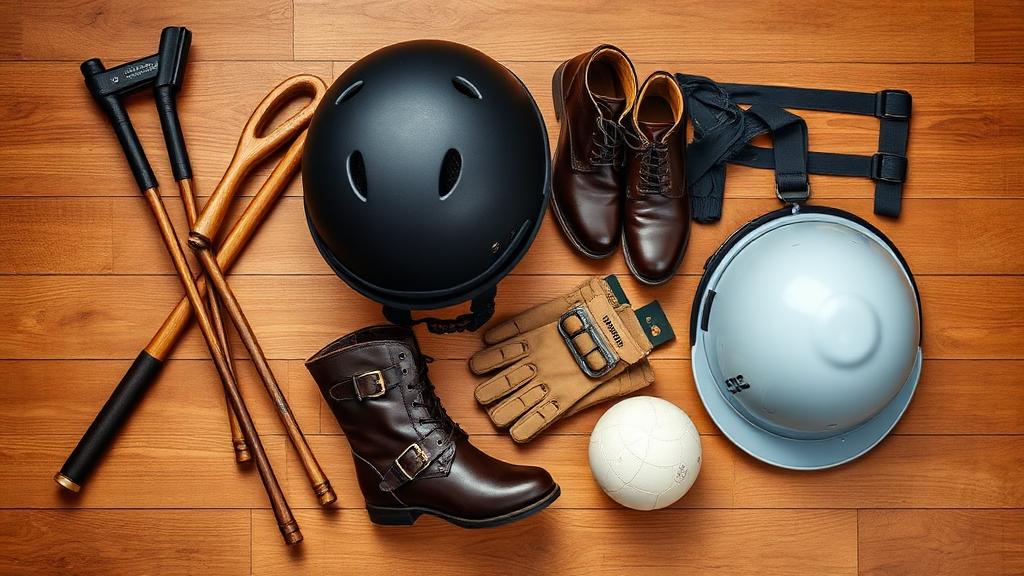
Polo is a contact sport played at speed on horseback, and the consequences of inadequate protective equipment can range from painful bruising to serious injury. Yet protective gear decisions are often made hastily — grabbing whatever is cheapest or most readily available — without understanding what different types of protection are actually designed to do or how to assess whether a piece of kit genuinely fits and functions.
This guide covers every category of polo protective equipment in detail, with guidance on what to look for, how to assess quality, which brands are respected in the market, and when to replace gear that has reached the end of its protective life.
Knee Guards: The Most Important Protection in Polo
Knee guards are, for most players, the single most important item of protective equipment in polo. The knees are exposed to collision with other riders' legs, contact with the [mallet](/glossary/mallet) during swing and follow-through, and impact with the saddle and horse's flanks during hard riding. Knee injuries sustained in polo range from bruising and lacerations to serious ligament damage, and appropriate knee protection significantly reduces injury risk across all these mechanisms.
Types of Polo Knee Guards
**Wrap-around guards**: The most common design. A padded shell wraps around the knee, typically secured by straps above and below the joint. These offer good coverage and are relatively easy to fit and adjust.
**Integrated boot-top guards**: Some polo boots include integrated knee protection built into the boot upper. These offer excellent security (no chance of the guard slipping) but are less adjustable in coverage.
**Strap-and-cup designs**: Similar to sports knee guards used in cricket or basketball, these centre a hard cup over the kneecap and secure with circumferential strapping. Less common in polo but used by some players.
**Professional-grade composite guards**: High-end guards used by professional players typically feature composite materials — often a combination of high-density foam, polycarbonate or ABS shell, and breathable fabric backing. These offer superior protection and are significantly more expensive than entry-level options.
What to Look for in a Polo Knee Guard
**Coverage area**: The guard should cover not just the kneecap but extend above and below the joint. The inner and outer aspects of the knee (where contact from other riders' legs most commonly occurs) should be covered.
**Fit and movement**: A guard that restricts movement or constantly slips down is a guard you will take off. Test the fit in the riding position — sitting on a chair simulating the mounted posture — and confirm the guard stays in place through flexion.
**Impact absorption**: Squeeze the guard. High-quality padding will feel dense and resilient, not soft and spongy. The hard outer shell should be rigid enough to distribute impacts rather than deform and transmit force directly to the joint.
**Breathability**: Polo is played in warm conditions. Guards that trap heat and moisture become uncomfortable quickly. Look for perforations, mesh panels, or moisture-wicking liners.
Sizing
Most polo knee guard manufacturers provide sizing charts based on circumference measured just above and below the knee. Measure both and compare to the manufacturer's guide. If you fall between sizes, generally size up for knee guards — a slightly larger guard that sits well is better than a tight guard that restricts movement.
Respected Brands
When to Replace
Replace knee guards if:
Helmets: Non-Negotiable Head Protection
Helmet requirements vary between national associations but are universally required for competitive play. Head protection is not optional, and purchasing the cheapest compliant helmet is a false economy.
Standards and Certification
In Great Britain, the HPA requires helmets that meet ASTM F1163, EN 1384, PAS 015, or other approved standards — check current HPA regulations as these are updated periodically. The USPA requires ASTM F1163 certification as a minimum.
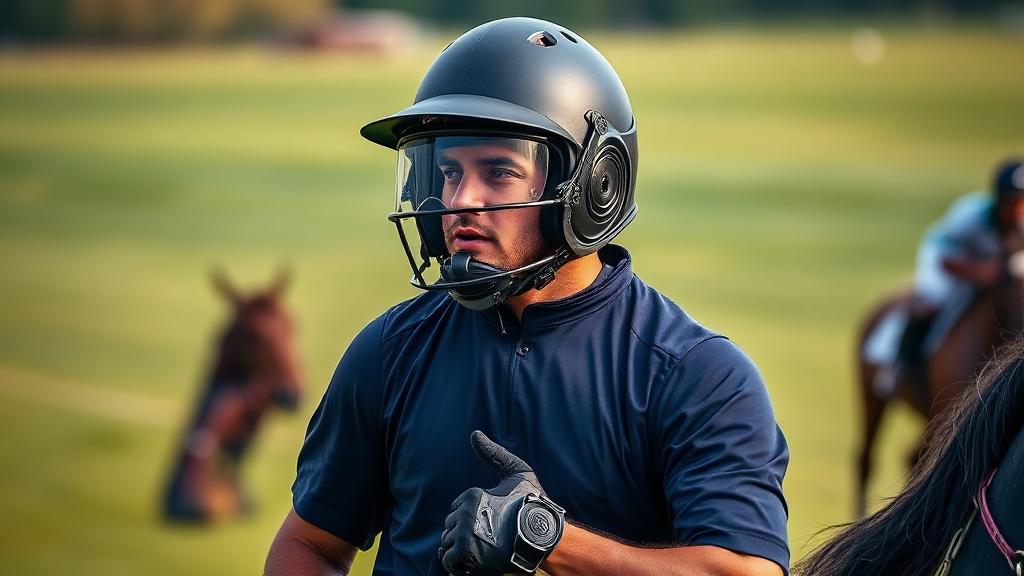
Polo-specific helmets differ from general equestrian helmets in offering additional face protection options (visors or face guards) and in being designed for the specific impact profile of polo play.
Key Considerations
**Fit**: A polo helmet must fit snugly without being painfully tight. It should not rock forward, backward, or side to side when properly fastened. Professional fitting at a recognised equestrian retailer is strongly recommended.
**Ventilation**: Polo is played in warm conditions. Helmets with good ventilation channels manage heat build-up significantly better than budget options.
**Retention system**: The chinstrap and helmet retention system should keep the helmet firmly positioned during fast riding, ride-offs, and if the worst happens, during a fall.
**Replacement after impact**: Any helmet that has sustained a significant impact — including falls where the helmet contacted the ground — should be replaced, even if it appears undamaged. The structural integrity of the foam liner may be compromised invisibly.
Boots: Support, Grip, and Protection
Polo boots serve multiple functions: they protect the leg from mallet contacts and saddle rub, provide ankle and lower leg support during fast riding, and via their soles offer grip in the stirrup. Traditional polo boots are tall leather boots extending to just below the knee.
Traditional vs Modern Options
**Full-length leather polo boots**: The classic option, extending from the foot to just below the kneecap. They provide excellent lower leg protection and the traditional aesthetic. Well-made leather boots are durable and can be resoled and maintained for many years. They are however expensive — quality custom or semi-custom polo boots represent a significant investment.
**Short boots with chaps**: Many recreational players combine shorter boots with leather or synthetic chaps (gaiters). This combination costs less than full polo boots and allows more size flexibility. Chaps should be properly fitted to avoid wrinkles or folds that can cause pressure points.
**Synthetic options**: Several manufacturers offer synthetic polo boots at lower price points than leather. Quality varies significantly; some are excellent, others provide poor ankle support and wear quickly. Look for reinforced ankle regions and genuine leather or quality synthetic in the sole construction.
Spurs
Many polo players use spurs for precise communication with the horse. Polo spurs are typically short, rounded (not sharp), and angled. Check your club's rules on spur types — some clubs restrict options for safety reasons.
Gloves: Grip and Weather Protection
Polo gloves are not primarily about protection from impact (though they offer some) — they are about maintaining grip on the mallet and reins in varying weather conditions, and reducing the blisters and hand fatigue that bare-handed play produces.
Materials
**Leather gloves**: The traditional choice. Full-grain leather provides excellent grip and durability. Cabretta (soft sheep leather) is popular for its feel. Leather gloves require conditioning to remain supple.
**Synthetic and mixed materials**: Many players prefer synthetic-palm gloves for better moisture management in warm conditions. Look for grip-enhancing textures on the mallet-hand palm.
**One glove vs two**: Many polo players wear a glove only on the mallet hand (typically the right hand) to maintain maximum feel on the reins with the left. Others wear both, particularly in cold or wet conditions.
Elbow and Forearm Guards
While not universally worn in polo, elbow guards and forearm guards are increasingly common, particularly among players who have experienced mallet contact injuries. The elbow is vulnerable to impact from the follow-through of a shot, and a hard elbow contact at pace is genuinely painful and potentially serious.
Polo-specific forearm guards typically combine an elbow cup with a forearm sleeve, offering protection along the most exposed section of the hitting arm.
Body Protectors
Body protectors — padded vests designed to absorb impact in falls — are not universally required for polo but are strongly recommended, particularly for less experienced riders and in competitive matches.
Modern body protectors are significantly lighter and less restrictive than older designs. The best options allow a full range of upper-body movement including the polo swing while providing meaningful ribcage and spinal protection.
Standards
The European standard EN 13158 Level 3 is appropriate for polo. Protectors certified to this standard have been tested against impacts representative of equestrian falls.
Building Your Protective Equipment Checklist
A complete polo protection kit should include:
| Item | Priority | Estimated Cost Range |
|------|----------|---------------------|
| Certified helmet | Essential | £100–£400 |
| Polo knee guards | Essential | £40–£150 |
| Polo boots or short boots + chaps | Essential | £100–£600+ |
| Mallet-hand glove | Strongly recommended | £15–£60 |
| Body protector | Strongly recommended | £60–£200 |
| Elbow guard | Recommended | £20–£80 |
For a full breakdown of starting and ongoing [costs](/costs) in polo, including protective equipment budgeting, see our dedicated costs guide.
Caring for Your Protective Equipment
**Knee guards**: Wipe down with a damp cloth after each use. Check straps and closures. Allow to dry fully before storage.
**Helmets**: Do not store in car boots or direct sunlight — heat degrades foam liners. Clean with a soft damp cloth. Never submerge.
**Leather boots**: Clean after each use, condition regularly with appropriate leather conditioner. Dry at room temperature — never near direct heat.
**Gloves**: Hand wash in cool water with mild soap, reshape and dry flat.
Buying Second-Hand Protective Equipment
Second-hand polo boots, chaps, and gloves are generally fine to purchase second-hand with normal hygiene precautions. Second-hand helmets and body protectors require caution — there is no way to assess the internal condition of a helmet that has been in a significant fall, and a compromised helmet may offer no more protection than wearing nothing. If in doubt, buy new.
Frequently Asked Questions
Are polo knee guards the same as cricket or hockey knee guards?
No. Polo-specific knee guards are designed for use on horseback, with different fit profiles and attachment systems. Cricket and hockey guards are designed for standing athletes and will not perform correctly in the riding position.
Can I use a general equestrian riding hat instead of a polo-specific helmet?
Check your national association's requirements. Some associations accept any hat meeting specified safety standards regardless of sport designation; others require polo-specific or ASTM polo-certified helmets. Never assume — check the current regulations before competing.
How often should I replace my knee guards?
Every 3 to 5 years under normal use, or immediately if the guard is damaged, deformed, or has absorbed a significant direct impact.
Do I need different equipment for [arena polo](/glossary/arena-polo) vs outdoor polo?
The equipment is broadly the same, though some arena players prefer shorter boots for the different physical demands of the smaller court. Helmet and knee guard requirements are the same.
Are custom polo boots worth the cost?
For serious players who play regularly, custom boots are typically worth the investment. The fit improvement over ready-to-wear options reduces blisters, provides better ankle support, and with proper care, custom boots last significantly longer than cheaper alternatives.
Where should I buy polo equipment?
Reputable polo-specific retailers, national association suppliers, and established equestrian retailers are the safest options. Be cautious of unbranded equipment from online marketplaces without clear certification information, particularly for helmets. Check our [equipment guide](/equipment) for more detailed sourcing advice.