Polo vs Polocrosse: What's the Difference?
Compare these two great equestrian sports — from rules and equipment to costs and accessibility.
Polo vs Polocrosse: What's the Difference?
Polo and polocrosse share obvious similarities — both involve horses, a ball, and attempts to score goals. But the sports differ significantly in rules, equipment, culture, and accessibility. Here's a comprehensive comparison.
Origins and History
Polo
Polo originated in Central Asia over 2,000 years ago, spreading through Persia to India, where British colonizers adopted it in the 1850s. The sport became associated with military cavalry and aristocracy, eventually spreading globally through British influence.
Polocrosse
Polocrosse was invented in Australia in 1939, combining elements of polo with lacrosse (hence the name). Developed as a more accessible alternative to polo, it was designed to be played with one horse per player rather than the multiple-horse strings polo requires.
Equipment
The Stick/Mallet
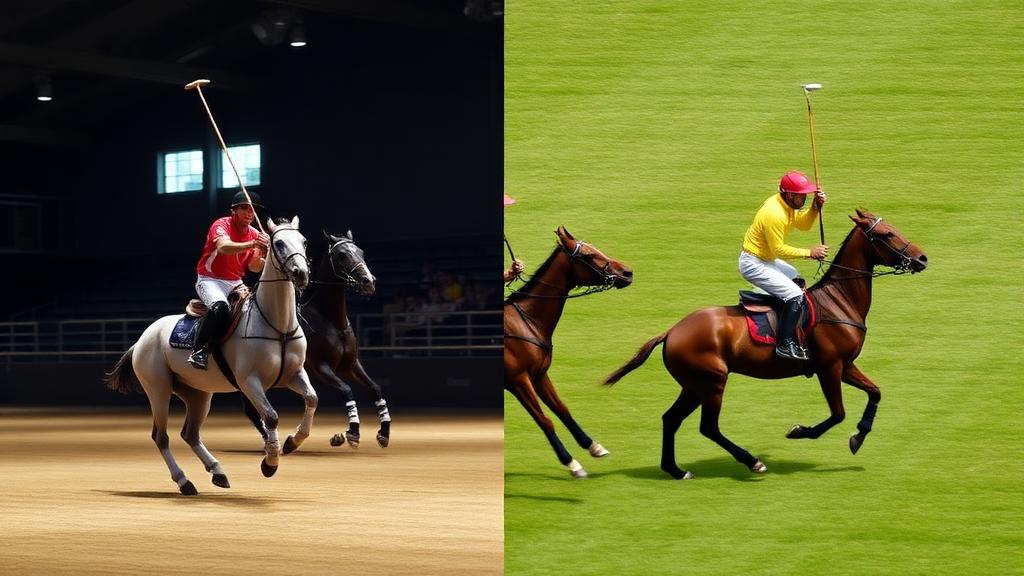
**Polo**: Uses a [mallet](/glossary/mallet) — a long bamboo or composite shaft with a cylindrical wooden head. Players hit a ball on the ground.
**Polocrosse**: Uses a racquet with a net head (like lacrosse). Players catch, carry, and throw the ball.
The Ball
**Polo**: A hard plastic ball (outdoor) or larger leather-covered ball (indoor/arena). Played on the ground.
**Polocrosse**: A soft rubber ball with some give. Carried in the racquet net and thrown, not hit along the ground.
Rules Overview
Team Size
**Polo**: 4 players per team (outdoor grass polo); 3 per team ([arena polo](/glossary/arena-polo))
**Polocrosse**: 6 players per team, but only 3 play at a time in rotating sections
The Playing Field
**Polo**: Massive — 300 yards × 160 yards for grass polo; smaller for arena
**Polocrosse**: 160 meters × 60 meters (approximately 175 × 65 yards), significantly smaller
Game Structure
**Polo**: 4-6 chukkas of 7.5 minutes each. Players typically use different horses each [chukka](/glossary/chukka).
**Polocrosse**: 6-8 chukkas of 6-8 minutes each. Each player uses ONE horse for the entire game.
[Goal](/glossary/goal) Scoring
**Polo**: Hit the ball between goal posts; teams change ends after each goal
**Polocrosse**: Throw the ball through the goal from designated goal-scoring areas; only certain positions can score
The One-Horse Rule
This is the fundamental difference. In polo, top players use 6+ horses per match, changing mounts each chukka. In polocrosse, one horse must do all the work. This single rule shapes everything else about the sports.
Horses
Polo
Polocrosse
Cost Comparison
Entry Level (Annual Estimates)
| Expense | Polo | Polocrosse |
|---------|------|------------|
| Horse(s) | $15,000-50,000+ (3-4 horses) | $5,000-15,000 (1 horse) |
| Equipment | $1,000-2,000 | $500-1,000 |
| Club Fees | $2,000-10,000 | $500-2,000 |
| Horse Maintenance | $15,000-30,000/year | $5,000-10,000/year |
| **Annual Total** | **$35,000-90,000+** | **$10,000-25,000** |
Professional Level
High-goal polo can cost $500,000+ per season. Polocrosse's highest levels remain a fraction of this cost.
The Accessibility Factor
Polocrosse was explicitly designed to be affordable. The one-horse rule makes competitive participation possible without wealth. This remains the sport's primary appeal.
Culture and Community
Polo
Polocrosse
Social Scene
Polo events often feature VIP hospitality, celebrity attendance, and luxury brand sponsorship. Polocrosse events are typically more casual, family-friendly, and centered on the playing community rather than spectators.
Geographic Distribution
Polo
Polocrosse
Skill Comparison
What Transfers
What Differs
Which Is "Harder"?
Neither is inherently harder — they require different skills:
For Spectators
Polo
Polocrosse
Crossover Players
Some players compete in both sports, though this is uncommon:
**Polo to Polocrosse**: Polo skills often overwhelm polocrosse opposition initially, but the racquet work and single-horse requirement require adjustment.
**Polocrosse to Polo**: Excellent foundation in riding and field sense, but mallet work starts from scratch and multi-horse management is new.
Which Should You Choose?
Choose Polo If:
Choose Polocrosse If:
Can They Coexist?
Absolutely. The sports serve different needs:
Many equestrian families play polocrosse locally while attending polo as spectators. Some regions use polocrosse as a pathway to polo — building horsemanship before transitioning.
Conclusion
Polo and polocrosse share roots but have evolved into distinct sports. Neither is "better" — they serve different purposes:
**Polo**: Tradition, spectacle, and the highest level of mounted ball sport
**Polocrosse**: Accessibility, community, and the joy of mounted competition without requiring wealth
Both deserve your respect. Try both if you can.