Snow Polo Rules: Playing at Altitude and on Frozen Lakes
A comprehensive guide to snow polo rules — from the iconic St. Moritz format and Aspen adaptations to horse preparation, the red ball, and high-altitude safety protocols.
Snow Polo Rules: Playing at Altitude and on Frozen Lakes
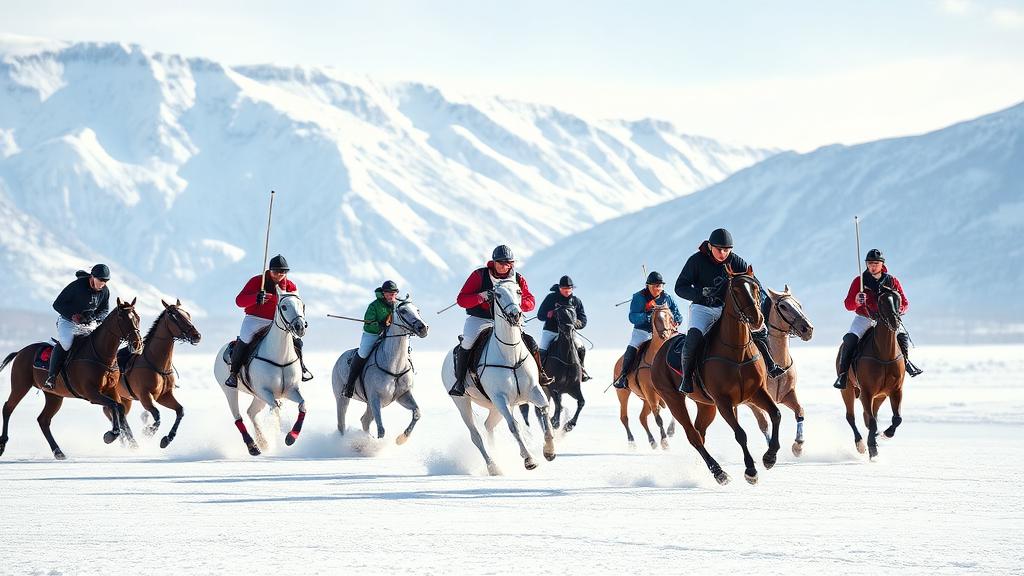
Snow polo is polo's most visually arresting variant. Played on frozen lakes or packed snow fields against backdrops of alpine peaks, it has become a fixture of the winter luxury calendar, drawing royalty, celebrities, and serious players to venues in Switzerland, Austria, Aspen, and beyond. But beneath the glamour lies a genuinely demanding technical sport with rules and protocols carefully adapted for the unique challenges of snow and high altitude. This guide covers everything you need to know.
Origins and History
Snow polo began in St. Moritz, Switzerland in 1985. The frozen Lake of St. Moritz — 1,800 meters above sea level — provided a natural arena of unusual beauty, and the event quickly attracted international attention. The format was developed by a small group of Swiss polo enthusiasts who adapted existing polo rules to account for snow conditions and altitude effects on both horses and players.
From St. Moritz, snow polo spread to other alpine venues: Kitzbühel and Bad Ragaz in Austria, Klosters in Switzerland, Aspen and Vail in the United States, and Cortina d'Ampezzo in Italy. Each venue has developed its own traditions, but the core rules remain largely consistent across events, guided by the Snow Polo World Cup framework and national associations.
The Playing Surface
The snow polo field presents unique challenges:
Lake ice poses specific structural risks. Tournament organisers conduct ice thickness testing in the weeks before the event, with a minimum ice depth of 60 centimetres typically required for horse safety. Engineers monitor the ice throughout the tournament, and the event is cancelled or relocated if structural integrity is compromised.
The Red Ball
The use of a bright red ball is perhaps snow polo's most distinctive visual element, and it is entirely practical:
Team Size and Format
Snow polo is played 3-a-side, like arena and beach polo:
[Chukka](/glossary/chukka) Duration and Match Structure
Most snow polo events use:
Matches typically last 40 to 60 minutes including breaks, making them manageable in cold alpine conditions for both competitors and spectators.
Scoring and Ends
Scoring follows standard polo rules:
Fouls and Penalties
Snow polo applies the same core right-of-way and dangerous play rules as standard polo, with adaptations:
Right of Way
The right-of-way rule remains central. However, snow conditions affect stopping distances and turning radius significantly — horses cannot stop as quickly on hard-packed snow as on grass. Umpires apply a broader safety margin when judging [crossing](/glossary/crossing) fouls, acknowledging the physical limitations of the surface.
Penalty Shots
The standard outdoor penalty structure applies with adjusted distances for the smaller field:
Some events modify these distances based on their specific field dimensions.
Boards Play
With the enclosed board system, boards penalties are applied when a foul occurs within 5 meters of the boards. The awarded free hit is taken from 5 meters off the boards, perpendicular to the line of play.
High-Altitude Rules and Safety Protocols
Altitude is a critical variable in snow polo, particularly at venues like St. Moritz (1,800m), Aspen (2,400m), and some South American winter events above 3,000m.
Effects on Horses
At altitude, reduced oxygen availability means:
Governing bodies and tournament organisers address this through:
Effects on Players
Players at altitude experience:
Players arriving from lower altitudes are advised to acclimatise for at least 48 hours before competitive play. Tournament medical staff should be briefed on altitude sickness symptoms (headache, dizziness, nausea) and protocols for evacuation or treatment.
Cold Weather Protocols
Tournament rules typically include provisions for:
Horse Preparation for Snow Polo
Preparing horses for snow polo requires specific attention:
Shoeing
Snow polo horses are typically shod with **studs** — metal protrusions added to horseshoes that provide grip on snow and ice. The configuration of studs varies:
Some horses play with **snowball pads** — rubber pads between the shoe and hoof that prevent snow compaction ("balling") in the hoof, which causes horses to walk as if on high heels and significantly increases fall risk.
Leg Protection
Snow polo horses typically wear:
Conditioning
Horses should be in peak cardiovascular condition before competing at altitude. Training at altitude (if possible) or at least extended light work at the venue during acclimatisation is recommended.
Player Equipment for Snow Polo
Standard polo safety equipment applies, with additions for the cold environment:
St. Moritz: The Premier Snow Polo Event
The Snow Polo World Cup St. Moritz is the sport's flagship event, held annually in late January. Key features:
The event operates under full snow polo rules as detailed above, with particular emphasis on altitude acclimatisation (mandatory 7-day minimum for horses) and ice safety protocols.
Aspen Snow Polo: The American Format
The Aspen Valley Polo Club's winter event (typically held in December/January) operates at 2,400 meters, making altitude management even more critical than in St. Moritz. The Aspen format features:
Rules follow the same core framework as St. Moritz, with minor local adaptations approved by the USPA.
Getting Started in Snow Polo
Snow polo is an elite sport with limited entry points for casual participation. The most accessible routes are:
1. **Attend a snow polo event as a spectator**: Most events welcome the public and provide an unparalleled experience. See our [tournaments](/tournaments) section for the annual calendar.
2. **Contact alpine polo clubs**: Several clubs in Switzerland, Austria, and Colorado offer snow polo clinics for experienced grass polo players during winter seasons.
3. **Be an experienced player first**: Given the conditions, snow polo is not appropriate for beginners. Proficiency in outdoor polo — at least to a 0 to 1 handicap — is the minimum realistic starting point.
For detailed guidance on becoming a polo player, see our [learn polo](/learn) guide. For costs involved in the broader sport, see our [costs of polo](/costs) page.
FAQs
Why is a red ball used in snow polo?
White balls are invisible against snow. Red and orange balls are standard in snow polo to ensure visibility for players and spectators.
How thick does the ice need to be for snow polo on a frozen lake?
Most events require a minimum of 60 centimetres of ice depth. Ice engineers test the lake in the weeks before the event and continue monitoring throughout.
Is snow polo more dangerous than grass polo?
The risks are different. Falls on snow can be softer than on hard ground, but the unpredictable footing and altitude effects on both horse and rider create unique hazards. Proper preparation significantly mitigates these risks.
Do horses need special shoes for snow polo?
Yes. Snow polo horses are shod with studded shoes for grip and may use rubber pads to prevent snow from compacting in the hoof.
Can beginners play snow polo?
Snow polo is not recommended for beginners. The conditions require experienced horsemanship and polo skill. Most events require a minimum handicap of -1 or 0.
How many chukkas in a snow polo match?
Typically four chukkas of four to five minutes each, compared to six to eight chukkas in high-goal grass polo.
Where are the main snow polo events?
St. Moritz (Switzerland), Kitzbühel (Austria), Aspen and Vail (USA), and Cortina d'Ampezzo (Italy) host the major annual events.
What happens if the ice cracks during a match?
Play is immediately suspended, and horses and players are evacuated from the lake. Tournament organisers have emergency protocols for this scenario, and it is a central consideration in pre-event planning.